







My most-told story about how my grandma migrated to Chicago from Greenwood, Mississippi, in 1940 is what happened when she got here. At just 17 years old, she boarded a train to a city — and climate — she didn’t know. She hadn’t packed a coat and learned firsthand why the Windy City got its moniker when she stepped on that platform and the cold and chill of the Chicago spring immediately hit her.
But while she wasn’t quite prepared for Chicago, Chicago was prepared for her. Her cousin arrived at the train station to pick up the stubborn teen and welcome her with a nice warm coat. Soon, she’d learn, this city wasn’t so different from the one she was running away from. And, like the oft-repeated quote from Ryan Coogler’s “Sinners” so aptly reminds us today: “Chicago ain’t nothing but Mississippi with tall buildings.”
That’s because Chicago couldn’t be Chicago without Mississippi. During the Great Migration, more Black people came to Chicago from Mississippi than from any other state. My grandma and the half-million others are why the tie between the state and this city is so strong. It’s also why Black Chicagoans are feeling a particular connection to the joy our Southern families are feeling now that Mississippi has its first Black senator since Reconstruction.
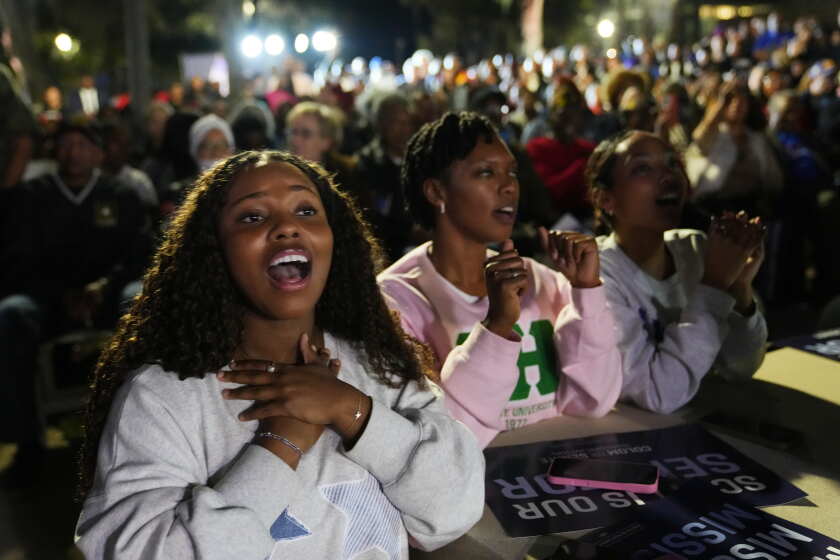
Here in Chicago, I’ve seen a celebration for our Mississippi family: people doing shout-outs about where they’re from, telling family stories, even steppin’ in celebration.
Over a third of Mississippi’s residents are Black, the highest percentage of any state. And yet, it took 145 years for Sen.-elect Scott Colom to be elected to represent it. And Black Mississippians fought for this victory. Voter drives and organizing against suppression worked, and according to NPR election result data, Mississippi was among the states in which majority-Black counties had high voter turnout.
A century and a half is a long time to be without representation, and I think about this timeline in the perspective of my own family. Between 1881 and today, my family had four generations of Black Mississippians and only two generations born in Chicago. For Black people like me, it’s impossible not to feel an immense sense of pride.
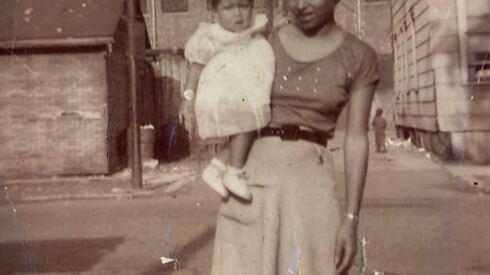
The author’s grandmother, Bertha Eatmon, holding her daughter Janice, the author’s aunt, in Bronzeville in 1954. Eatmon arrived in Chicago from Mississippi when she was 17.
Provided
Tanikia “Nikki” Carpenter told me she feels the same way. Her family is mostly from Sunflower County, where my dad’s side of the family is from.
“We have a saying in our family that we’re Mississippi mud, and that means we can’t forget where we came from,” she told me. “That’s our roots.”
A writer who lives on the South Side, Carpenter wrote a play titled “Emmett’s Photo” that reimagines the moments before photos of Black Chicago teen Emmett Till, who was killed visiting family in Mississippi, were published in JET magazine in 1955 — an action that helped galvanize the Civil Rights Movement.
Like Carpenter’s relatives, some elders in my family experienced trauma from their years in Mississippi, which meant they couldn’t always talk about what they’d been through there. Some struggled to return or to even mention what they’d witnessed. It’s a strange, foggy gap in knowledge that newer generations like mine are trying to fill in with hopeful trips to Mississippi and searches for connection.
Mississippi’s moxie
While our elders’ pain and fear from the past sometimes created a physical division for us, we are seeing what might be a new era for Black Mississippi as an opportunity for us to support and recommit ourselves to our ancestral land. There’s an energy that reminds people of something Colom said on the campaign trail: Mississippi matters.
Carpenter feels like this is a positive step.
“It feels like it’s going in the right direction; it feels like even if no one comes to help Mississippi, they are down there helping themselves,” she said, adding that Mississippi is one of the most misunderstood places in America. “And so I’m so excited for them, and I’m ready to go back and just be with my people, explore even more of my roots.”
During his victory speech at the historic Tougaloo College, Colom mentioned how U.S. Rep. Bennie Thompson, D-Miss., and NAACP President and CEO Derrick Johnson — whom he calls his mentors — warned him: “We don’t think the cavalry is coming.”
Black voters in Mississippi became that cavalry.
“Mississippi voters made history because they refused to be intimidated, discouraged, or counted out,” Johnson said in a statement, adding that this win happened in “a state that has witnessed some of the nation’s most difficult battles for voting rights.”
But like when my grandma finally got that winter coat, things are looking up.
Arionne Nettles is a news editor at Chicago Public Media, where she edits cross-platform work across digital, print and audio at WBEZ and the Sun-Times
Black Chicagoans feel joy of Mississippi’s first Black senator since Reconstruction 2026
IUSTITIA.BG – Investigations 2009-2026 2026-11-18 02:09:12
Latest news World news Country news Most important news latest news most important latest of the day Justice Petar Nizamov Feathers Petar Nizamov- Feathers Justice bg iustitia.bg iustitia iusticia usticia investigation Burgas Bulgaria news news of the last hour news of the day news of today Bulgaria news The news from Bulgaria blitz news top news most important most commented latest news Boyko Borisov news weather coronavirus news news weather facebook youtube facebook instagram news today news of the last minutes news today today news news bg news leading news hot news bg news site for news all news news bg news of the last hour latest latest news bg news of today news today news today news of the last hour latest news today news bg news news 24 hours news vesti bg novini news world bird bg bivol bg bivol trud bg novini latest news today novinite bg news hello bulgaria political party coat of arms delyan peevski scandalous Bulgarian National Television Free Europe Television scandal exclusive live tv live right now tv tv online tv program bg live now tv news online tv online live court Burgas court Burgas district court Burgas court Burgas district court Burgas district court Burgas appellate court Burgas prosecutor Burgas prosecutor’s office Burgas district prosecutor’s office Burgas district prosecutor’s office Burgas district prosecutor’s office Burgas district prosecutor’s office Burgas district prosecutor’s office Burgas district prosecutor’s office Prosecutor General Ivan Geshev Prosecutor Geshev Tsatsarov Ministry of Internal Affairs Burgas ODMR Burgas ODPR Burgas police Burgas district police Burgas prosecutor Tsatsarov SGS cases Varna court chairman of the SGS court decisions on civil cases decisions on cases Plovdiv court decision of the court decisions cases Varna court criminal cases district district court decisions work in the court SGS chairman of the SGS judges Sofia court post judges Plovdiv court Plovdiv judges Plovdiv Supreme Court Inspectorate Supreme Court Supreme Judicial Council lawyer lawyer criminal cases lawyer civil cases lawyer marriage cases lawyer administrative criminal law criminal process civil law civil process administrative law constitutional law

