







In Rogers Park, a block from the lake, weeds are growing in front of a shuttered Irish pub. A sign above the door reads Mulligan’s Cafe, but a marquee above that identifies this closed business by another name: Biddy Mulligan’s. This unassuming storefront was once a hot spot for blues fans on Chicago’s North Side in the 1970s and 1980s.
During the Great Migration, African Americans moved north to escape Jim Crow-era racism. They brought the blues with them and settled mostly on the South and West sides of Chicago. What started in the Mississippi Delta with a single performer evolved to a more electric sound in the city and was dubbed the “Chicago style” with a full band.
There were other North Side blues clubs during this era, but how did Biddy Mulligan’s become so iconic? And what happened to the place? The simple answer is a changing neighborhood, shifts in musical tastes and an aging genre. However, to the musicians and regulars of Biddy Mulligan’s, there’s more to this club’s story.
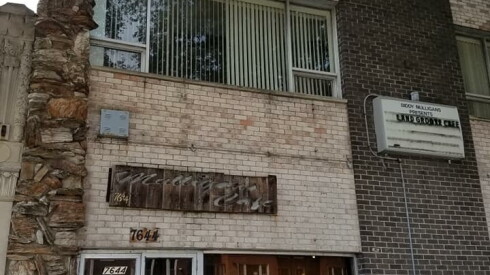
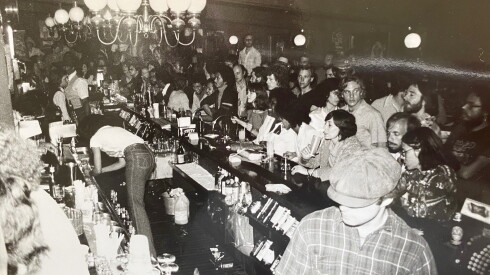
Biddy Mulligan’s used to be a neighborhood dive bar where fans could watch blues icons perform live. The storefront has sat vacant for years.
Richard Cotovsky
Biddy’s foray into the blues
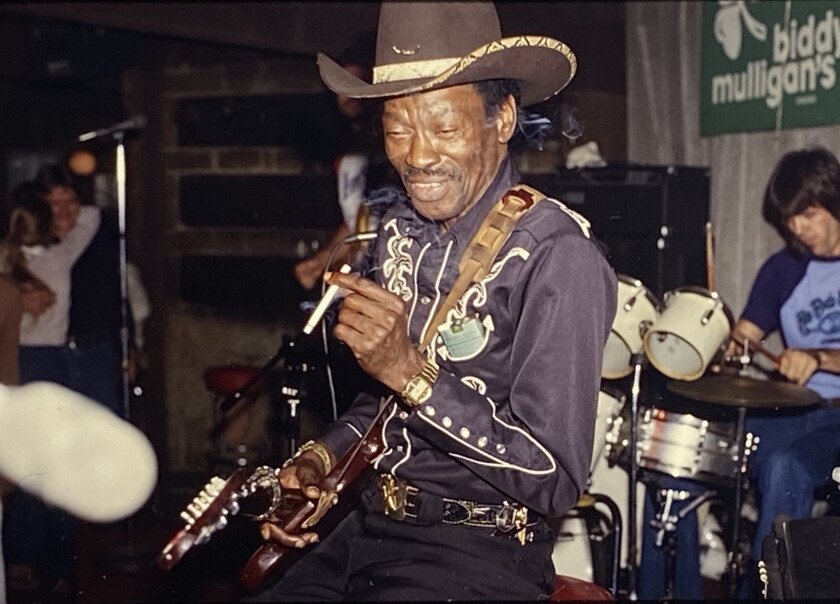
In the 1970s, places like Theresa’s Lounge and Peppers were legendary clubs in the Bronzeville neighborhood, where the blues was thriving. Greats like Bobby Rush and Otis Clay would perform regularly at these places. Meanwhile, on the North Side, a piano player named Bob Reidy started performing at Biddy Mulligan’s with his band. He invited the South and West Side legends to join him and fill out the bill. Biddy’s, located near Northwestern University and Loyola University in Rogers Park, exposed a new and younger audience to the likes of Buddy Guy and Junior Wells.
The club hit its stride in the late 1970s, when bluegrass banjo player Chip Covington bought the bar. He expanded the work Reidy had begun, and Biddy’s became a North Side hub for the blues. Covington had a deep appreciation for the folk tradition in the genre, and he saw that in the musicians he hired.
“ I didn’t buy talent because it would fill the room,” he said. “I bought talent because it was authentic.”
The musical standard at Biddy Mulligan’s was high and competition was fierce. Billy Branch, renowned harmonica player, got his start supporting Willie Dixon. He felt the warmth and accepting nature of Biddy’s, but he also felt the weight.
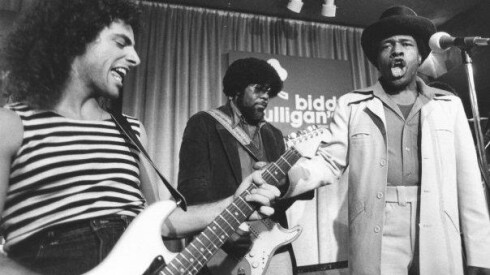
“ The bar was so high because of the level of musicianship,” he said. “You knew if you were going to sustain a gig, you had to come on with it.”
The caliber set by the players was met by an enthusiastic audience at Biddy’s. Ronnie Baker Brooks, son of the great Lonnie Brooks, used to be part of his father’s stage crew, lugging guitars and amps. He remembers seeing blues greats such as Taj Mahal and Koko Taylor perform at Biddy’s. The energy of their performances was amplified by that of the crowd. It was a room full of blues lovers, both on stage and in the audience.
Today, Baker Brooks leads his own band with lessons learned watching these pillars at the North Side club. “I always tell the audience that you’re the boss, and you determine how this show goes,” he said. “If you give us that energy, we’re gonna give it back to you 10 times. And I witnessed that firsthand at Biddy’s.”
Covington helped shape a community based on showcasing authentic talent. In 1981, Covington got married and moved overseas. He sold the club, then began a new era at Biddy’s.
Beyond the blues
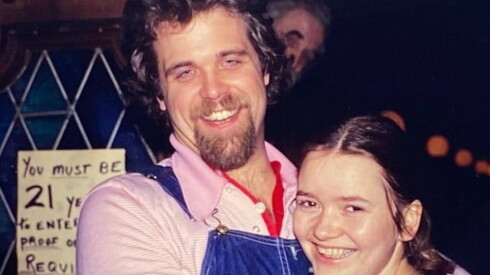
Andy Lakha was a blues fan and a Biddy’s fan. When he started to frequent the space, he had only been in the country for two years. He was a recent immigrant from Pakistan, and he convinced his dad and sister to buy the club with him. He was 19 at the time. Lakha would continue to book the talent Reidy and Covington had welcomed in but also branched out and booked acts with larger audiences, such as Dr. John, Los Lobos and experimental jazz icon Sun Ra.
The blues was an international sensation, and the Rogers Park club also earned an international reputation. Mike Miller bought Biddy’s in 1990. On the streets of Paris, he was stopped by passersby who recognized his Biddy’s T-shirt. “Oh, I’ve been to Biddy Mulligan’s,” they told Miller.
But the popularity would decline as audience tastes shifted. Dick Shurman, a blues historian, theorized the once “powerful, visceral music… was too old-fashioned and probably understated for the modern audiences.”
Miller and his wife, Colleen, diversified the acts they brought into Biddy Mulligan’s to keep up with audience preferences. They booked Blues Traveler, who was up and coming at the time. The iconic jam band Phish had their first Chicago gig at Biddy Mulligan’s. There was mixed success but the blues — the primary appeal — was changing.
Miller sold the club two years later. The next owners tried to adapt to the changing neighborhood and audience by turning the club into a college party scene. But that didn’t work out, and the club closed down.
Chip Covington had moved back to the U.S. and settled in nearby Evanston with his family. He hated seeing the club sit vacant. He had memories of watching Otis Clay and Otis Rush perform onstage. He met his wife there. So he bought the club back for emotional reasons.
“I didn’t even really have the money. I went into debt,” he said. “The alderman was very nice. Everybody was very nice who wanted to bring Biddy Mulligan’s back, but it just didn’t work.”
A year later in 1995, Covington closed Biddy Mulligan’s doors for good.
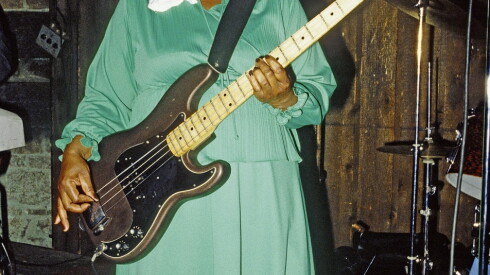
“ That was about 20 years of live music in Biddy’s,” said Bruce Iglauer, founder of Alligator Records. “For a music club, that’s a very long run.”
What’s next for the blues?
The closing of Biddy’s is not a unique story in the blues scene. Other storied clubs around Chicago have had to shutter over the years. But there’s still an appetite for the music.
Billy Branch has devoted a lot of his career to his “Blues in Schools” program across the country and the world. Last year, he did a residency in schools on the West Side of Chicago. He’s eager to shout out the newcomers to the genre.
“Harrell Davenport goes by the name of Young Rell,” he said. “He’s a walking encyclopedia of knowledge. He knows more about blues history than me and all my friends combined.”
Branch is also watching King Fish out of Mississippi, Southern Avenue out of Memphis and D.K. Harrell out of Louisiana.
You can still catch live blues in Chicago. Branch recommends Rosa’s Lounge, where its tagline hits the mark: “Chicago’s friendliest blues lounge.”
From Irish pub to Chicago blues hub: What happened to Biddy Mulligan’s? 2026
IUSTITIA.BG – Investigations 2009-2026 2026-11-11 01:10:01
Latest news World news Country news Most important news latest news most important latest of the day Justice Petar Nizamov Feathers Petar Nizamov- Feathers Justice bg iustitia.bg iustitia iusticia usticia investigation Burgas Bulgaria news news of the last hour news of the day news of today Bulgaria news The news from Bulgaria blitz news top news most important most commented latest news Boyko Borisov news weather coronavirus news news weather facebook youtube facebook instagram news today news of the last minutes news today today news news bg news leading news hot news bg news site for news all news news bg news of the last hour latest latest news bg news of today news today news today news of the last hour latest news today news bg news news 24 hours news vesti bg novini news world bird bg bivol bg bivol trud bg novini latest news today novinite bg news hello bulgaria political party coat of arms delyan peevski scandalous Bulgarian National Television Free Europe Television scandal exclusive live tv live right now tv tv online tv program bg live now tv news online tv online live court Burgas court Burgas district court Burgas court Burgas district court Burgas district court Burgas appellate court Burgas prosecutor Burgas prosecutor’s office Burgas district prosecutor’s office Burgas district prosecutor’s office Burgas district prosecutor’s office Burgas district prosecutor’s office Burgas district prosecutor’s office Burgas district prosecutor’s office Prosecutor General Ivan Geshev Prosecutor Geshev Tsatsarov Ministry of Internal Affairs Burgas ODMR Burgas ODPR Burgas police Burgas district police Burgas prosecutor Tsatsarov SGS cases Varna court chairman of the SGS court decisions on civil cases decisions on cases Plovdiv court decision of the court decisions cases Varna court criminal cases district district court decisions work in the court SGS chairman of the SGS judges Sofia court post judges Plovdiv court Plovdiv judges Plovdiv Supreme Court Inspectorate Supreme Court Supreme Judicial Council lawyer lawyer criminal cases lawyer civil cases lawyer marriage cases lawyer administrative criminal law criminal process civil law civil process administrative law constitutional law

