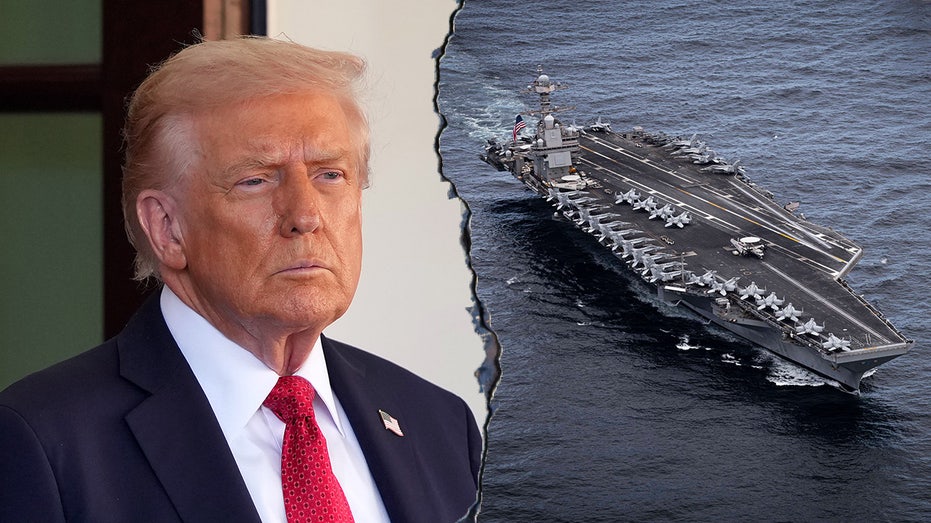
As U.S. forces surge into the Middle East amid escalating tensions with Iran, the military posture is drawing comparisons to the 2003 Iraq War buildup. But military experts and former officials say that while the scale of visible force may look similar, the design and intent are fundamentally different.
In early 2003, the United States assembled more than 300,000 U.S. personnel in the region, backed by roughly 1,800 coalition aircraft and multiple Army and Marine divisions staged in Kuwait and Saudi Arabia ahead of Operation Iraqi Freedom. The force was built for invasion, regime removal and occupation.
Today’s deployment tells a different story, and the absence of massed ground forces remains the clearest contrast with 2003.
“I believe there is absolutely no intention to put ground forces into Iran. So, the buildup is very different,” retired Gen. Philip Breedlove, former NATO supreme allied commander of Europe, told Fox News Digital.
IRAN DRAWS MISSILE RED LINE AS ANALYSTS WARN TEHRAN IS STALLING US TALKS
“What is happening is that both firepower and supplies are being moved to the right places. … Amateurs talk tactics; professionals talk logistics. And right now we are getting logistics right, not only in the form of shooters but supplies to sustain an effort,” he said.
John Spencer, executive director of the Urban Warfare Institute, told Fox News Digital, “The strategic objective in both cases is coercion, shaping an adversary’s decision calculus through visible military power. But while the scale of the buildup may appear comparable, what is being mobilized and threatened is fundamentally different.
“In 2003, the United States assembled a ground-centric force built for regime removal, territorial seizure and occupation,” he said. “Today’s posture is maritime and air-heavy, centered on carrier strike groups, long-range precision strike and layered air defense, signaling clear readiness to act while also sending an equally clear message that there are no boots on the ground planned.”
“The recent U.S. military buildup against Iran — which now includes two aircraft carrier battle groups, in addition to dozens of other U.S. planes that have been sent to bases in the region and air and missile defense systems — provides President Trump with a significant amount of military capability should he authorize military operations against Iran,” said Javed Ali, associate professor at the University of Michigan’s Ford School and a former senior counterterrorism official.
Ali noted that U.S. capabilities already in the region at Al Udeid Air Base in Qatar, Diego Garcia in the Indian Ocean and other locations give Washington multiple strike options.
If ordered, he said, operations “would very likely be broad in scope against a range of targets like the ruling clerical establishment, senior officials in the IRGC, key ballistic missile and drone production, storage and launch facilities and elements of Iran’s nuclear infrastructure, and last for days if not longer.”
Breedlove said the incremental deployment of carriers and air assets appears designed to increase pressure, not trigger immediate war.
“We brought in one carrier battle group that did not change the rhetoric in Iran. … So, now the president has started sailing a second carrier battle group to the area. I think all of these things are increasing the pressure slowly on Iran to help them come to the right decision. … ‘Let’s sit down at the table and figure this out.’”
Ali emphasized another major difference with legal authority and coalition structure. The 2003 Iraq War was authorized by congressional authorization for use of military force and backed by a large international coalition, including tens of thousands of British troops.
“Currently, no similar AUMF has been approved by Congress for military operations against Iran, which might mean President Trump may invoke his standing authority under Article II of the U.S. Constitution as commander in chief as a substitute legal basis, given the threats Iran poses to the United States,” Ali said.
That does not mean escalation is risk-free. Ali warned Iran could respond with “ballistic missile attacks” in far greater frequency than past strikes, along with drones, cyber operations and maritime disruption in the Persian Gulf.
Breedlove pointed to lessons learned from Iraq.
“We want to have a clear set of objectives. … We do not want to enter an endless sort of battle with Iran. … We need to have a plan for what’s day plus one,” he said, warning against repeating past mistakes where military success was not matched by post-conflict planning.
The central military distinction, analysts say, is this: 2003 was an invasion architecture. Today is a deterrence and strike architecture.
The force now in place is optimized for air superiority, long-range precision strikes and sustained naval operations, not for seizing and holding territory. Whether that posture succeeds in compelling Iran back to negotiations without crossing into open conflict may depend less on numbers than on how each side calculates the cost of escalation.
Iraq War flashbacks? Experts say Trump’s Iran buildup signals pressure campaign, not regime change 2026 IUSTITIA.BG – Investigations 2009-2026 2026-02-19 20:10:15 Latest news World news Country news Most important news latest news most important latest of the day Justice Petar Nizamov Feathers Petar Nizamov- Feathers Justice bg iustitia.bg iustitia iusticia usticia investigation Burgas Bulgaria news news of the last hour news of the day news of today Bulgaria news The news from Bulgaria blitz news top news most important most commented latest news Boyko Borisov news weather coronavirus news news weather facebook youtube facebook instagram news today news of the last minutes news today today news news bg news leading news hot news bg news site for news all news news bg news of the last hour latest latest news bg news of today news today news today news of the last hour latest news today news bg news news 24 hours news vesti bg novini news world bird bg bivol bg bivol trud bg novini latest news today novinite bg news hello bulgaria political party coat of arms delyan peevski scandalous Bulgarian National Television Free Europe Television scandal exclusive live tv live right now tv tv online tv program bg live now tv news online tv online live court Burgas court Burgas district court Burgas court Burgas district court Burgas district court Burgas appellate court Burgas prosecutor Burgas prosecutor’s office Burgas district prosecutor’s office Burgas district prosecutor’s office Burgas district prosecutor’s office Burgas district prosecutor’s office Burgas district prosecutor’s office Burgas district prosecutor’s office Prosecutor General Ivan Geshev Prosecutor Geshev Tsatsarov Ministry of Internal Affairs Burgas ODMR Burgas ODPR Burgas police Burgas district police Burgas prosecutor Tsatsarov SGS cases Varna court chairman of the SGS court decisions on civil cases decisions on cases Plovdiv court decision of the court decisions cases Varna court criminal cases district district court decisions work in the court SGS chairman of the SGS judges Sofia court post judges Plovdiv court Plovdiv judges Plovdiv Supreme Court Inspectorate Supreme Court Supreme Judicial Council lawyer lawyer criminal cases lawyer civil cases lawyer marriage cases lawyer administrative criminal law criminal process civil law civil process administrative law constitutional law