

• News
  • Investigations
  • Online Store IUSTITIA
  • Real Estate agency
  • Petar Nizamov
  • Fitness & Wellness coach
  • Food Delivery
  • Charcoal retail
  • Firewood Wholesale
  • Charcoal Wholesale
  • Web Development agency
ar العربية dk Dansk de Deutsch gr Ελληνικά en English bg български cz Čeština es Español fr Français il עברית hr Hrvatski hu Magyar it Italiano lt Lietuviškai lv Latviešu valoda mk македонски јазик no Norsk Bokmål nl Nederlands pl Polski pt Português ro Română ru Русский sk Slovenčina si Slovenščina sr Српски језик se Svenska tr Türkçe ua Українська japan 日本語 thai ไทย iran فارسی china 中文 (中国) belarus Беларуская мова osterreich Deutsch Austria schweiz Deutsch Switzerland shqiperia shqiperia usa English USA bih Bosanski
Thursday, November 12, 2026
Logo for a website dedicated to investigative journalism and in-depth articles on topics of public interest
  • Advertise with us
  • About Us
  • News 2025
  • World News
  • USA
  • Regional
    • Israel Today | News from Israel
    • Dubai Today | UAE Dubai News
    • Middle east Today | Arabic News
    • Germany Today | News from Germany and Austria
    • News in Russian | News from Russia
    • Netherlands Today | News from Belgium and Holland
    • Italy Today | Italian News
    • Spain Today | Spanish News
    • Germany Today | The News from Germany
    • Greece Today | The News from Greece and Cyprus
    • Poland Today | News from Poland
    • Czech Republic Today | News from Prague Brno
    • Hungary Today | News from Hungary
    • Slovenia Today | News from Slovenia
    • Romania Today | News from Romania
    • News from Bulgaria
    • Turkey Today | News from Turkey
  • Bulgaria
    • News from Bulgaria
    • The latest from Bulgaria
    • Politics in Bulgaria
    • The news from Burgas Bulgaria
    • Interview from Bulgaria
    • Bulgarian Court System
    • DISTRICT COURT – BURGAS and Burgas Prosecutor’s Office
    • Corruption in Bulgaria
    • Sport
    • The most important from Bulgaria
  • Analyses
  • Investigations
  • Scientific articles
  • Fitness
  • Videos
  • Women’s fashion
  • Men’s fashion
  • Questions
  • English
    • العربية
    • Dansk
    • Deutsch
    • Ελληνικά
    • English
    • български
    • Čeština
    • Español
    • Français
    • עברית
    • Hrvatski
    • Magyar
    • Italiano
    • Lietuviškai
    • Latviešu valoda
    • македонски јазик
    • Norsk Bokmål
    • Nederlands
    • Polski
    • Português
    • Română
    • Русский
    • Slovenčina
    • Slovenščina
    • Српски језик
    • Svenska
    • Türkçe
    • Українська
    • 日本語
    • ไทย
    • فارسی
    • 中文 (中国)
    • Беларуская мова
    • Deutsch Austria
    • Deutsch Switzerland
    • shqiperia
    • English USA
    • Bosanski
  • Contact us
No Result
View All Result
Logo of a media organisation specialising in investigative journalism, featuring articles, analyses and documented material of public interest
No Result
View All Result

Vast Roman Road Network That United an Empire, Revealed in New Digital Map 2025

Петър Низамов Petar Nizamov by Петър Низамов Petar Nizamov
November 8, 2025
in 2025 News, 2025 News, Analyses, Investigations, World News, World News
0
Investigative journalism website featuring in-depth investigations, public interest stories, news and selected journalistic reports

A selection of investigative articles and journalistic publications. The image highlights the website’s focus on investigative journalism and public interest topics.

Споделете в социалните мрежи / Споделете в социалните мрежи / Share in social media
Facebook X LinkedIn Reddit Telegram WhatsApp Email Print
Roman road network
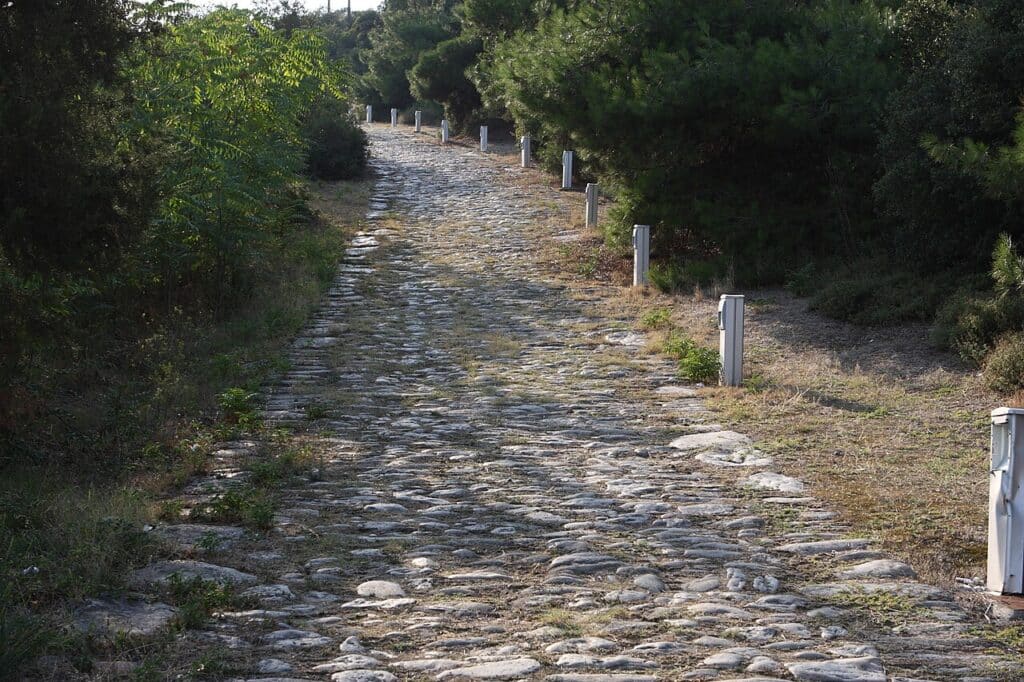
A new digital map presents the vast Roman road network. Photo of part of ancient Via Egnatia in Kavala, Greece. Credit: Philipp Pilhofer CC BY-SA 3.0

A new digital, interactive map reveals the vast road network that spanned much of the Roman Empire, connecting with older routes in Ancient Greece and profoundly shaping the region’s development.

Съдържание :

Toggle
  • Roman road network geographical research scope and chronology
  • A great achievement
  • When the Romans took over
  • Via Egnatia
  • A long highway
  • Roman roads and Greek trade
  • A defining feature of life
  • Roman roads in the modern world

This massive network of roads was among the Roman Empire’s greatest achievements, linking territories from Britain to North Africa and from Spain to the Near East. It enabled people, armies, goods, and ideas to move swiftly and safely across immense distances.

The scientific study Itiner-e: A High-Resolution Dataset of Roads of the Roman Empire was created by identifying roads from archaeological and historical sources, locating them through modern and historical topographic maps and remote sensing, and digitizing them with detailed metadata and specified categories for each road segment. The project draws on published historical and archaeological data, topographic maps, and remote sensing evidence, covering routes dated up to around 400 AD.

The resulting map documents a total of 299,171.31 kilometers (185,196 mi.) of roads across nearly 4,000,000 square kilometers (1,544,408 sq. mi.). The dataset includes 14,769 road segments and is divided into fourteen connected components, representing contiguous landmasses such as continental Europe, Britain, Asia–North Africa, and several Mediterranean islands. At the core of this extensive transport network were the main Roman roads, identified through milestones and historical records.

Roman road network geographical research scope and chronology
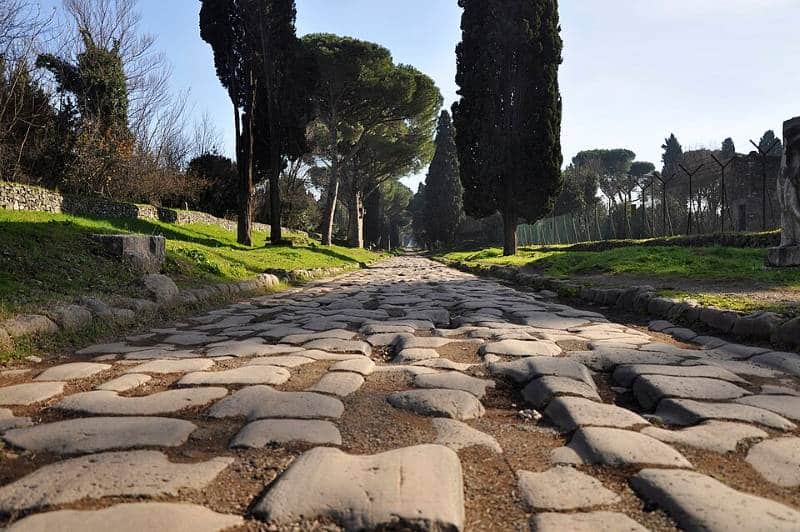
Rome via appia antica italy
Via Appia Antica. Credit: Wikimedia Commons / Paul Hermans CC BY 3.0

The geographical scope of the data collection is broadly defined by the extent of the Roman Empire during the Antonine dynasty, around 150 AD, when the empire reached its peak vastness, encompassing about 55 million inhabitants. The road system on the left bank of the Euphrates, between Samosata and Edessa (modern-day Samsat and Şanlıurfa, Turkey), is included, since the exact boundary between the Roman Empire and the Edessan kingdom cannot be precisely determined.

Dura–Europos in Syria is also included, although it was not permanently annexed until around 165 AD. Further regions to the east—such as Armenia and Mesopotamia—are excluded, as they were under Roman control only briefly during the early 2nd century AD. A chain of North Saharan oases in modern Libya and Algeria is included as well even though these areas were not part of the Roman Empire itself but belonged to the broader Roman trade network in North Africa. The region between Hadrian’s Wall and the Antonine Wall in Britain is likewise included despite Roman control there being short-lived (approximately 142–182 AD).

The lower chronological limit of the dataset is defined by the first incorporation of each territory into Roman rule as a province. Consequently, the earliest dated road in the dataset is the Via Appia, connecting Rome and Capua, built in 312 BC. This lower boundary varies by region. Because the Romans often incorporated older, pre-existing routes into their own road system—improving, paving, or outfitting them with bridges and milestones—evidence for pre-Roman roads in each region was also considered during data collection, based on available published sources.

A great achievement

The vast network of roads was one of the Roman Empire’s greatest achievements, linking territories from Britain to North Africa and from Spain to the Near East. It enabled people, armies, goods, and ideas to move swiftly and safely across immense distances.

The main reason this network was so effective lay in Roman engineering expertise. The carefully constructed roads allowed carts, horses, and armies to travel even through rugged terrain. Roman roads were built in layers: heavy stones formed the base, followed by gravel, and topped with large, flat paving stones. The result was a durable surface capable of lasting for centuries. Many of these roads have survived in some form to this day, demonstrating the remarkable solidity and efficiency of Roman engineering.

Among the many regions that benefited from the network was Greece, a land with its own long history, rich culture, and established travel and transportation traditions.

Before the arrival of the Romans, Greece already had roads, but most were small, local routes connecting nearby towns or leading to various religious sanctuaries throughout the region. Travel was slow and often difficult, especially in the mountainous areas. Paths between cities did exist, but they were usually narrow, uneven, and unsuitable for heavy carts. These routes served the needs of the independent Greek city-states, but they were limited in scale and reach.

The sea remained the principal mode of transportation for the Greeks. The expansion of the Roman road network, however, fundamentally changed this reality.

When the Romans took over

To understand the impact of Roman roads, it is essential to recall what existed prior to their time. In Ancient Greece, people traveled mainly by sea, as the mountainous terrain made land routes challenging and slow. When the Romans arrived and Greece became part of a vast imperial system, the needs of the region changed dramatically. The Romans required faster and stronger roads to move their armies, collect taxes, and integrate Greece more closely into the Empire.

Yet, the Romans did not erase traditional Greek travel routes. They built upon them, upgrading and expanding existing roads to meet the Roman engineering standards seen throughout the Empire. The Roman approach to road building was highly systematic. Engineers carefully selected routes, leveled the ground, and used layered materials to create durable surfaces. Roads were slightly curved to allow rainwater to drain away, while bridges, drainage systems, and milestones added to their efficiency and precision.

By ancient standards, this level of engineering was extraordinary. Many Roman roads remain visible today. In Greece, where earthquakes and steep terrain were common, Roman builders adapted their methods to local conditions, making travel safer and more accessible in regions that had once been difficult to reach.

Via Egnatia
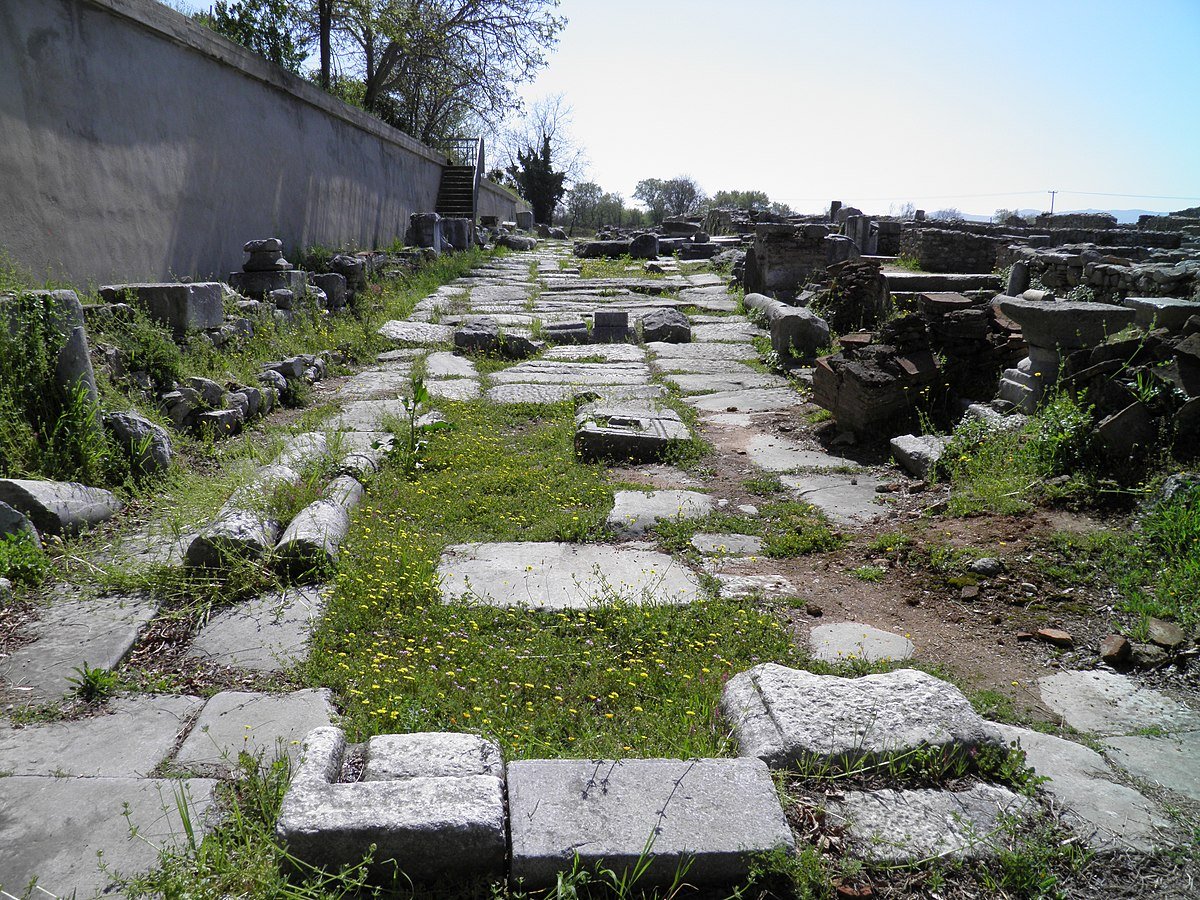
A portion of the via egnatia road running through philippi
The Via Egnatia was constructed in order to link a chain of Roman colonies stretching from the Adriatic Sea to the Bosphorus. Credit: Carole Raddato via Wikimedia Commons, CC BY-SA 2.0

One of the most vital Roman roads connected directly to the Greek world was the Via Egnatia. It served as a continuation of the Via Appia, one of the earliest and most strategically significant roads of the Roman Republic, which linked Rome to Brindisi. Stretching across the Balkan Peninsula from the Adriatic Sea to the Bosporus Strait and Byzantium, the Via Egnatia passed through regions now situated in Albania, North Macedonia, and Northern Greece. Once it entered Greek territory, it continued through major cities such as Thessaloniki, Philippi, and Amphipolis.

The Via Egnatia linked Greece and Italy via the Adriatic coast, and from the east it connected to routes leading deep into Asia Minor and eventually to the eastern provinces of the Roman Empire. This made Greece part of a major east–west corridor of the Mediterranean world. Along this route traveled goods, merchants, soldiers, officials, ideas, and religions, all contributing to the cultural and economic vitality of the region.

It was the first highway to traverse the entire Balkan Peninsula and also the first road built outside Italy by the Romans. Constructed between 146 and 120 BC by the Roman senator Gnaeus Egnatius, who named it after himself, the Via Egnatia reflected the growing importance of Macedonia as a Roman province. Egnatius became its governor shortly after Macedonia was conquered by Rome in 148 BC, following the Fourth Macedonian War.

A long highway

The Roman road stretched approximately 1,120 kilometers (696 mi.) and was about six meters wide although its easternmost sections may have been completed decades after Gnaeus Egnatius governed Macedonia. Parts of the Via Egnatia may have been built over an earlier military route connecting Illyria and Byzantium. The road linked several important cities across Northern Greece, Illyria, and Thrace, serving as a vital corridor for trade and the movement of Roman legions throughout the region.

At the westernmost end of the Via Egnatia lay Dyrrhachium in Illyria (modern-day Albania). Together with the nearby Greek polis of Apollonia, Dyrrhachium was a key commercial hub along the Adriatic coast. The road connected major urban centers such as Thessaloniki, Amphipolis, Philippi, Neapolis, Kypsela, and Pella—the birthplace of Alexander the Great and the former capital of the Kingdom of Macedon. At its eastern end stood Byzantium, which became even more significant after 330 AD, when Emperor Constantine renamed it Constantinople and pronounced it the capital of the Roman Empire.

The Via Egnatia was only one part of the broader Roman road system in Greece. Numerous smaller routes were built or improved to link cities, ports, and military bases. In the Peloponnese and Central Greece, roads connected Corinth, Argos, Sparta, Athens, and Thebes, strengthening communication and enabling smoother trade and administration across the region.

Corinth, already a strategic crossroads between northern and southern Greece, became even more important as a hub of land and sea travel. After the Romans destroyed the city in 146 BC, they later rebuilt it as a Roman colony, and the revived Corinth thrived—thanks in part to its easy access to the expanding Roman road network.
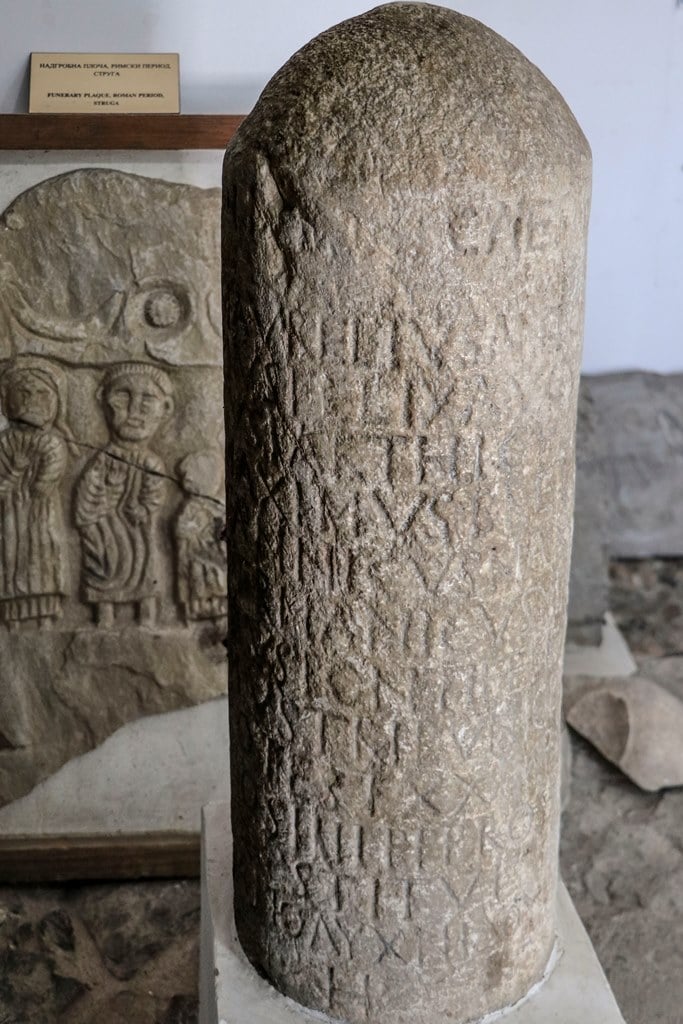
 

Roman road network
Mile stone on via egnatia in ohrid. Credit: clemens schmillen wikimedia commons cc by-sa 4. 0

Roman roads and Greek trade

Trade, among other things, was profoundly transformed by the Roman road system. Prior to Roman rule, Greek trade relied heavily on ships sailing between islands and coastal cities. The sea remained central, but the development of durable land routes enabled goods to move faster and in multiple directions. Farmers could now transport grain, olives, oil, wine, and textiles to markets more efficiently. Craftsmen could send pottery, metalwork, and other products to distant buyers, while merchants from Greece traveled inland to sell their goods, and foreign traders visited Greek towns more frequently. This increased mobility stimulated economic growth and deepened Greece’s connections with neighboring provinces.

Another major effect of the Roman roads was the acceleration of cultural exchange. Greece had long been a center of art, philosophy, and science, and Rome deeply admired Greek culture. The improved network allowed Greek teachers, doctors, and artists to travel more easily throughout the Empire, spreading Greek thought and influencing Roman education and intellectual life. At the same time, Roman customs and architecture took root in Greece. Public buildings such as baths, amphitheaters, and forums began popping up in Greek cities, reflecting how travel and communication fostered a vibrant cultural blending between the two civilizations.

The movement of religions along Roman roads was especially significant. Greece played a key role in the early spread of Christianity. The Apostle Paul, for example, traveled along the Via Egnatia during his missionary journeys, preaching in cities such as Thessaloniki, Philippi, and Corinth, all of which were situated on or near major Roman routes. The roads allowed Christian communities to remain in contact through letters and visits, supporting the rapid growth of the new faith. Without the Roman road network, such journeys would have been slower, riskier, and far less predictable.

A defining feature of life

The presence of Roman roads also shaped military control and political unity. For an empire as vast as Rome, the ability to move soldiers quickly was essential. In Greece, as elsewhere, Roman troops could travel efficiently along the roads to suppress revolts, defend borders, or respond to threats. This military advantage helped maintain Roman authority in the region and brought a sense of stability that encouraged trade and settlement. Cities located along major roads often grew wealthier and more influential, with some gaining new administrative roles within the Roman provincial system.

Despite these benefits, the impact of Roman roads was not entirely positive for local populations. Road construction and maintenance sometimes required heavy labor or local contributions. Land was taken for public use, and Roman officials oversaw many aspects of travel. The roads also made it easier for Rome to extract resources from its provinces. While economic opportunities increased, so did taxation and administrative pressure. Still, for many people, the advantages of safer travel and improved communication outweighed the disadvantages.

Over time, the Roman road network became a defining feature of life in the Empire. In Greece, the roads were a visible sign of Roman presence, but they also functioned as tools that helped blend the Greek and Roman worlds. Even after the fall of the Western Roman Empire, many routes remained vital. The Byzantine Empire, centered in Constantinople, inherited much of the eastern road system, and Greece continued to serve as a crossroads between Europe and Asia. Although some roads were neglected or damaged in later centuries, parts of the old Roman paths continued to guide travelers, armies, and merchants.

Roman roads in the modern world

The influence of Roman roads is still visible today. Many modern highways follow the same routes as ancient roads, and the archaeological remains of Roman roads, bridges, and milestones can be found throughout Greece, demonstrating the advanced engineering of the Romans. The famous Via Egnatia continues to exist as a highway connecting the westernmost part of Greece, Igoumenitsa in Epirus, with the easternmost part, Kipoi in Evros, even though it runs parallel to the original route. More importantly, the principle of linking regions through reliable infrastructure remains a lasting legacy that continues to shape societies.

The Roman road network was one of the most remarkable achievements of ancient engineering and administration. In Greece, it transformed travel, trade, culture, and politics. Greek geography and traditions influenced how the roads were built and used, while Roman technology and imperial priorities reshaped the region. The result was a lasting impact that integrated Greece more closely into the broader Mediterranean world.

Vast Roman Road Network That United an Empire, Revealed in New Digital Map 2025 IUSTITIA.BG – Investigations 2009-2025 2025-11-08 10:38:33 Latest news, world news, country news, most important news, latest news, most important, latest of the day, Justice, Petar Nizamov, Feathers, Petar Nizamov- Feathers, Justice bg, iustitia.bg, iustitia, iusticia, usticia, investigation, Burgas, Bulgaria, news, breaking news, news of the day, news of today, news from today, Bulgaria news, The news from Bulgaria, blitz news, top news, most important, most commented, latest news, Boyko Borisov, news, weather, coronavirus, news, news, weather, facebook, youtube, facebook, instagram, today’s news, last minute news, news today, today’s news, news, bg news, leading news, hot news, bg news, news site, all news, news bg, last hour news, latest, latest news bg, news from today, news today, last hour news, latest news, today, news bg, news, news vesti, 24 hours news, vesti bg novini, world news, bird bg, bivol bg, bivol, trud bg novini, latest news today, novinite bg news, hello bulgaria, political party coat of arms, delyan peevski, scandalous, bulgarian national television, free europe, television, scandal, exclusive, live, live tv right now, tv, tv online, tv program, bg, live now, tv news, online, live tv online, court, burgas court, burgas district court, burgas court, burgas district court, burgas district court, burgas district court, burgas court of appeal, burgas prosecutor, burgas prosecutor’s office, burgas district prosecutor’s office, burgas district prosecutor’s office, chief prosecutor, ivan geshev, prosecutor geshev, tsatsarov, mvr burgas, odmvr burgas, odp burgas, police burgas, district police burgas, prosecutor tsatsarov, sgs cases, court varna, chairman of the Supreme Court of Justice, court decisions in civil cases, decisions in cases, Plovdiv court, court decision, case decisions, Varna court, criminal, cases, district, district court decisions, work in court, Supreme Court of Justice chairman, Supreme Court judges, Sofia court, deputy judges, Plovdiv, Plovdiv court, judges Plovdiv, Supreme Court, Inspectorate of the Supreme Court of Justice, Supreme Judicial Council, Supreme Court, Supreme Judicial Council, lawyer, lawyer criminal cases, lawyer civil cases, lawyer matrimonial cases, lawyer administrative, criminal law, criminal process, civil law, civil process, administrative law, constitutional law,

Споделете в социалните мрежи / Споделете в социалните мрежи / Share in social media
Facebook X LinkedIn Reddit Telegram WhatsApp Email Print
Previous Post

Stellar Result! President Trump Exempts Hungary from Energy Sanctions 2025

Next Post

SNAP court rulings add to shutdown’s food assistance chaos 2025

Next Post
Investigative journalism website featuring in-depth investigations, public interest stories, news and selected journalistic reports

SNAP court rulings add to shutdown's food assistance chaos 2025

Leave a Reply Cancel reply

Your email address will not be published. Required fields are marked *

  • Rating

Search

No Result
View All Result
гугъл новини, гоогле новини, гугъл нюз, гъгъл нюз, google news, news google, google.bg, news.google.bg, Юстиция, новини, последното, най-важното, видео, телевизия, радио, Новини, петър низамов

Recent Posts

  • Bulgaria’s government proposes complete ban on advertising gambling games 2026
  • European Parliament demands that Russia returns deported Ukrainian children 2026
  • Bulgaria issues weather warnings over strong winds forecast for November 13 2026
  • Bulgaria’s Cabinet approves large-scale military joint acquisition deals with Italy, France and Spain 2026
  • Sofia signs 282M euro contract on EU grant funding to modernise urban transport, infrastructure 2026
  • Armistice Day in Colombelles marked with Macedonian representatives 2026
  • Armistice Day in Colombelles marked with Macedonian representatives 2026
  • GIFT GUIDES: THE BEST NORDSTROM GIFTS 2026
  • GIFT GUIDES: THE BEST NORDSTROM GIFTS 2026
  • Bulgaria’s Trakia Motorway tragedy: Recriminations and compensation 2026
  • Remembrance Day 2026 observed in Bulgaria’s capital Sofia 2026
  • Bulgaria’s exports in January – September 2026 up 1.3%, imports up 14.5% y/y 2026
  • Friedrich Merz Shuts Péter Magyar Up Mid Speech During Press Conference 2026
  • BulgariaDeath toll in 86-vehicle chain crash on Bulgaria’Bulgaria’s Trakia Motorway is 12, with final figure pendings Foreign Ministry warns of public sector strike in Ireland planned for November 12 2026
  • VDL: EC proposes dedicated funding of 50 million euro for Black Sea maritime security hub 2026
  • FV X AP: PLAN YOUR BUY 2026
  • GIFT GUIDES 2026: WHAT TO BUY YOUR HUSBAND 2026
  • EU extends EU Military Assistance Mission supporting Ukraine for further two years 2026
  • Bulgaria’s Plovdiv 2026
  • Not Viktor Orbán: A Pro-Migration Globalist Is the Frontrunner for the Top UN Job 2026
  • Von der Leyen to pledge new support for Romania and Bulgaria 2026
  • Hundreds of bags of red pepper wash up on beach near Bulgaria’s Plovdiv 2026
  • FV X AP HOLIDAY COMING 11.11 2026
  • Hundreds of bags of red pepper wash up on beach near Bulgaria’s Plovdiv 2026
  • Bulgarian Navy team destroys Russian drone found near Shabla 2026
  • Two aircraft land at Sofia Airport following latest bomb threats – report 2026
  • Eurostat: Bulgaria had EU’s third-highest annual increase in retail trade volume in September 2026 2026
  • NSI poll: Consumer confidence in Bulgaria plummets 2026
  • Bulgarian sculptor and former Speaker of Parliament Vezhdi Rashidov dies 2026
  • EIB: Rising energy prices have ‘significantly’ cut purchasing power of three out of four Bulgarians in past 12 months 2026
  • Bulgarian Air Force escorted three civilian aircraft following bomb threats 2026
  • GIFT GUIDES 2026: STOCKING STUFFERS 2026
  • Bulgaria’s government proposes inposases in municipal real estate taxes 2026
  • Bulgaria’s government proposes inposases in municipal real estate taxeste taxes 2026
  • Environment Ministry: First tests of Bulgaria’s Black Sea waters do not show any pollution from ships hit in drone attacks 2026
  • Bulgaria’s electoral commission fines three major TV stations for breaking law on exit polls 2026
  • LET’S PARTY 2026
  • REGRETS & REBUYS: BEAUTY EDITION 2026
  • Bulgaria records 3.67 billion euro Budget deficit in January-September 2026 2026
  • Bulgaria issues new weather warnings because of heavy rainfall 2026
  • Bulgaria utilities regulator raises gas prices by 32.5% for November 2026 2026
  • Bulgaria issues highest-level weather warning for several districts for November 3 over forecast heavy rain 2026
  • Pro-Kremlin candidate Yotova wins Bulgarian presidential elections – final results 2026
  • Bulgaria’s 2026 presidential elections: Radev, Yotova in triumphalist messages as finale shows win for pro-Kremlin ticket 2026
  • Bulgaria’s 2026 presidential elections: Yotova 52.5%, Gyurov 43.4% in second round – exit poll 2026
  • Bulgaria’s 2026 presidential elections: Second round is attracting higher voter turnout than the record-low first 2026
  • Een interieurontwerper inhuren in België: van eerste idee tot complete realisatie 2026
  • Szentendre’s Japanese Garden Reopens After Major Renovation 2026
  • Hungarian Charity Launches Fundraiser for Christian Victims of Jordanian Terror Attack 2026
  • Hungarians Embrace AI for Financial Advice but Still Prefer Human Guidance 2026
  • Patriots 4 Europe Challenge TISZA’s Authoritarian Measures Before the European Commission 2026
  • Hungarian Pilot Leads International Military Helicopter Training Course in Pápa 2026
  • SATURDAY SESH 2026
  • Aquincum Museum to Host Celtic Halloween Festival in Budapest 2026
  • THE LOOK FOR LESS 2026
  • How 1956 Activist Forestry Students from Sopron Put Down New Roots in Canada 2026
  • GIFT GUIDES 2026: THE TOP 10 THAT I GIVE AGAIN AND AGAIN 2026
  • MEP Brands Ursula von der Leyen’s 1956 Anniversary Attendance a Visit by a “Colonizer” 2026
  • The Price of Bullying: Chinese Airlines Scaling Back Flights to Hungary 2026
  • Exhibitions and Commemorations Across Hungary and Transylvania Mark 1956 Revolution 2026
  • Former Central Bank Chief Arrested – Timing Works in Péter Magyar’s Favor 2026
  • Cancelling the Paks II Nuclear Power Station Could Cost Hungary Billions 2026
  • Alice in Wonderland Comes to Life at Budapest’s Lumina Park 2026
  • Budapest’s Palace of Justice Opens Its Doors to Visitors After Major Restoration 2026
  • Citizens Over 50 Play an Increasingly Vital Role in the Economy 2026
  • Researchers Develop AI Model to Improve Image Recognition Reliability 2026
  • Viktor Orbán Reacts to TISZA’s 2027 Budget, Warns of Threat to Jobs 2026
  • Hundred new ambulance vehicles put into service 2026
  • Four Hungarian Museum Displays Win Exhibition of the Year Awards 2026
  • E.ON Introduces Digital Monitoring to Cut Methane Emissions 2026
  • National Gallery Brings Forgotten Women Artists into the Spotlight 2026
  • Budapest’s Historic M1 Metro Line Named Among the World’s Best 2026
  • Péter Magyar Presents 2027 Budget Proposal with Unpleasant Surprises 2026
  • winwin m2 review: Mobile-first casino for Malaysia 2026
  • Magyar Rubs Salt into Our 1956 Wound by Inviting Ursula von der Leyen to the 70th Anniversary 2026
  • New Investment to Strengthen the Infertility Care System 2026
  • Global Commemorations Mark the 70th Anniversary of the 1956 Revolution 2026
  • New Exhibition Explores What AI Cannot Replace in Creative Work 2026
  • Captivating Korean Performance Is Coming to Budapest 2026
  • Environmental Agency Revokes Dongwha Battery Plant’s Permit 2026
  • Fencers Win Two World Cup Titles in an Outstanding Weekend 2026
  • Rudas Baths’ 450-Year-Old Tradition Added to National Heritage Register 2026
  • No Meaningful Dialogue Between Government and Local Councils, Mayor Says 2026
  • Viktor Orbán: “This Is a Political Vendetta, and I Am the Target” 2026
  • Zero Outrage While Magyar Keeps Hungary Among Top EU Buyers of Russian Gas 2026
  • Photos show aftermath of riots as masked groups clash with police across France 2026
  • Canadian PM Carney says 4 service members killed, dozens injured in military base fire 2026
  • Pro-Israel leader warns Democrats failing to condemn ‘vicious Jew haters’ in Congress 2026
  • Where’s Macron? French leader blasted for attending concert as riots escalated 2026
  • Advent Bazilika Named Europe’s Most Beautiful Christmas Market 2026
  • Advent Bazilika Named Europe’s Most Beautiful Christmas Market 2026
  • Naomi Klein on the end of capitalism | BBC Radical 2026
  • Ted Cruz claims Trump waiving Russia sanctions is a ‘mistake’ 2026
  • Zelensky hits out at White House for pausing sanctions on Russia 2026
  • This is an INTERNATIONAL movement to DESTABILIZE the West: Paul Mauro 2026
  • EXCLUSIVE: Lawyer for accused Cornell student talks client’s case #shorts 2026
  • Why Is Trump Criticising Zelensky And Complimenting Putin? | BBC Newscast 2026
  • Canada could face division if these Alberta separatist voters have their way 2026
  • SATURDAY SESH 2026
  • Flames race across California hillside as Santa Ana winds arrive #shorts 2026

    CONTACT US

    What are you interested in?


    No Result
    View All Result

    Categories

    Association “Bulgarian Legal Committee – Protection of Citizens by Legal Means” (БЮК)
    UIC: 205028308
    Burgas, 18 Gladstone Street, 056/84 45 14

    Council for Electronic Media (SEM)
    Sofia, 69 Shipchenski Prohod Blvd.

    Tel: 02/ 9708810 Tel: 02/ 9708812

    E-mail: [email protected]

    • За Нас – агенция за разследваща журналистика ЮСТИЦИЯ – Бургас, България
    • Рекламирайте с ЮСТИЦИЯ
    • Прозрачно управление
    • Докладване на проблем
    • Условия за ползване
    • Защита на данните
    • Правила на форума
    • Политика за бисквитките
    • Екип
    • Помощ
    • Карта на сайта
    • Статистика
    • Реклама
    • Контакти
    • Етичен кодекс на българските медии
    • RSS емисия
    • Често задавани въпроси (FAQ)
    • Задайте въпрос във форума
    • Вестник “ЮСТИЦИЯ”
    • العربية
    • Dansk
    • Deutsch
    • Ελληνικά
    • English
    • български
    • Čeština
    • Español
    • Français
    • עברית
    • Hrvatski
    • Magyar
    • Italiano
    • Lietuviškai
    • Latviešu valoda
    • македонски јазик
    • Norsk Bokmål
    • Nederlands
    • Polski
    • Português
    • Română
    • Русский
    • Slovenčina
    • Slovenščina
    • Српски језик
    • Svenska
    • Türkçe
    • Українська
    • 日本語
    • ไทย
    • فارسی
    • 中文 (中国)
    • Беларуская мова
    • Deutsch Austria
    • Deutsch Switzerland
    • shqiperia
    • English USA
    • Bosanski

    © 2026 JNews – Premium WordPress news & magazine theme by Jegtheme.

    No Result
    View All Result
    • Advertise with us
    • About Us
    • News 2025
    • World News
    • USA
    • Regional
      • Israel Today | News from Israel
      • Dubai Today | UAE Dubai News
      • Middle east Today | Arabic News
      • Germany Today | News from Germany and Austria
      • News in Russian | News from Russia
      • Netherlands Today | News from Belgium and Holland
      • Italy Today | Italian News
      • Spain Today | Spanish News
      • Germany Today | The News from Germany
      • Greece Today | The News from Greece and Cyprus
      • Poland Today | News from Poland
      • Czech Republic Today | News from Prague Brno
      • Hungary Today | News from Hungary
      • Slovenia Today | News from Slovenia
      • Romania Today | News from Romania
      • News from Bulgaria
      • Turkey Today | News from Turkey
    • Bulgaria
      • News from Bulgaria
      • The latest from Bulgaria
      • Politics in Bulgaria
      • The news from Burgas Bulgaria
      • Interview from Bulgaria
      • Bulgarian Court System
      • DISTRICT COURT – BURGAS and Burgas Prosecutor’s Office
      • Corruption in Bulgaria
      • Sport
      • The most important from Bulgaria
    • Analyses
    • Investigations
    • Scientific articles
    • Fitness
    • Videos
    • Women’s fashion
    • Men’s fashion
    • Questions
    • English
      • العربية
      • Dansk
      • Deutsch
      • Ελληνικά
      • English
      • български
      • Čeština
      • Español
      • Français
      • עברית
      • Hrvatski
      • Magyar
      • Italiano
      • Lietuviškai
      • Latviešu valoda
      • македонски јазик
      • Norsk Bokmål
      • Nederlands
      • Polski
      • Português
      • Română
      • Русский
      • Slovenčina
      • Slovenščina
      • Српски језик
      • Svenska
      • Türkçe
      • Українська
      • 日本語
      • ไทย
      • فارسی
      • 中文 (中国)
      • Беларуская мова
      • Deutsch Austria
      • Deutsch Switzerland
      • shqiperia
      • English USA
      • Bosanski
    • Contact us

    © 2026 JNews – Premium WordPress news & magazine theme by Jegtheme.

    This website uses cookies. By continuing to use this website, you consent to the use of cookies. Please see our Privacy and Cookie Policy.