








The two years of the VMRO-DPMNE government were marked by the largest infrastructure boom, such as simultaneous work on six highway sections that has never happened before, progress on the railway to Bulgaria, issues with the rule of law, as well as dealing with the consequences of the energy and economic crisis caused by the wars in the Middle East and in Ukraine.
Although many may say that the results were not sufficient and that more could have been done, we should not forget what a devastated country SDSM left. Almost bankrupt and in a subordinate position in relation to its neighbors, especially Bulgaria. Therefore, this Government has the task of, first, bringing the internal and external situation back to normal and only then talking about some progress.
Prime Minister Hristijan Mickoski said yesterday in his interview on the occasion of two years in office that there is currently a historically parallel work on six highways in Macedonia.
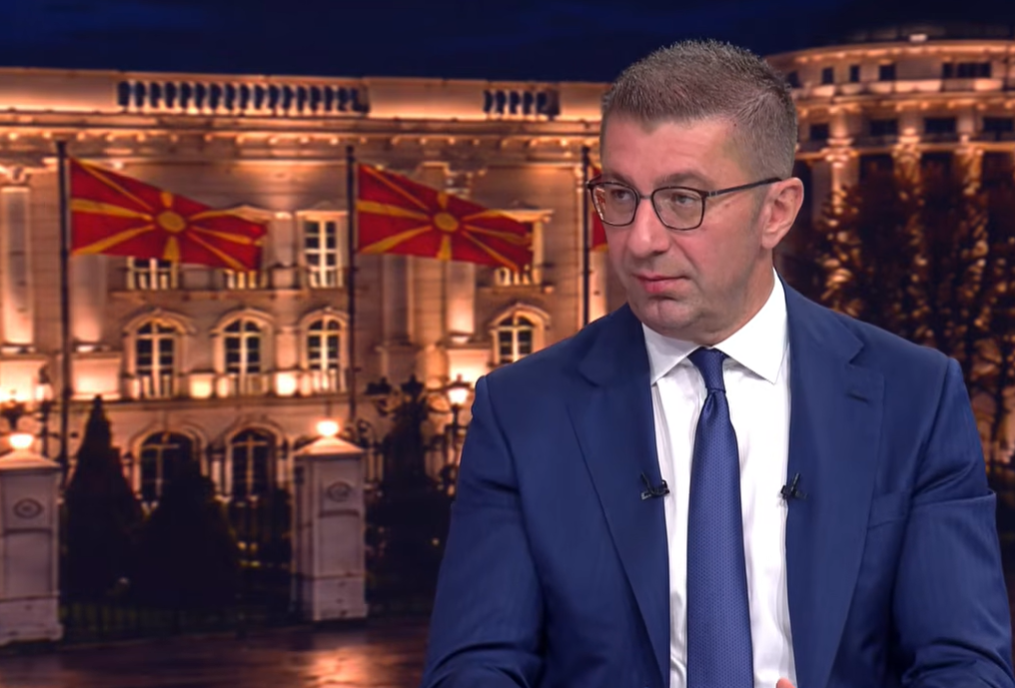
I am happy to say that we have finally closed the Kichevo-Ohrid highway financially, thanks to a consortium created by domestic banks, after the Chinese lenders left us out to dry, in a manner of speaking. We have rounded up the Corridor 8 and Corridor 10d projects financially for this year, also thanks to the domestic banks. Now we are looking on the international financial market. Next week, on Tuesday, we will ask external lenders for a framework amount for the end of the project, which will provide us with the money until the end, said Prime Minister Mickoski.
Regarding European integration, the Prime Minister stressed that he does not expect any changes if we know what the previous government signed “a poisonous tree that bears poisonous fruits”. However, he sees hope in our European integration path in the proposal of France and Germany for the gradual admission of countries from the region and access to European funds. Mickoski also expressed his satisfaction that we are leaders in the reform agenda, and this was confirmed by the EU.
I spoke with Chancellor Merz and President Macron, clearly defining what we think could be added or taken away from their proposal. There is no point to the proposal if its purpose is to open and close clusters, but at the same time Kosovo and Bosnia are not even candidates, Macedonia has not begun to negotiate, Serbia has no aligned foreign and defense policy with teh EU and can’t open or close clusters. Maybe it’s sufficient to find some other mechanism such as the reform agenda of the plan for gtowth, which would give incitement and support to the Western Balkans. That was my proposal during the bilateral meetings and I think it drew the necessary attenton. We will see what will be made operational out of all that, but I am satisfied that we are looking for constructive solutions within the realm of the possible, so that the region has a European perspective, Mickoski said about the recent EU – Balkans summit in Tivat.
Mickoski assessed that, as he said, “the previous Government, pressured by the failure to deliver at home, was literally in a position to sign a blank sheet of paper, thinking that in this way it would gain the grace to continue being the government. Obviously, that strategy failed and they are now the opposition and where they are”.
But now we have the problem, as well as many other problems that we need to solve. What is our approach? We say okay, we cannot ignore the elephant. We acknowledge that the elephant is in the room, but let’s see if this request will be the last. They tell us it will be the last. If it is so, let’s make it official in some way. We had a sentence by the International Court of Justice in our favor against our southern neighbor, and still they blocked our NATO membership. But any guarantee is better than nothing, said Mickoski.
Regarding the constitutional amendments, Mickoski stressed that one cannot avoid the fact that Bulgaria ignores the rulings of the European Court of Human Rights and is asked to bring in Bulgarians without any guarantees.
Our eastern neighbor says this: “The change to the Constitution is due to disrespect for human rights. With the change to the Constitution, the human rights of the Bulgarian community in our country will be strengthened.” Let’s analyze that now. First, we are politicians. We are not experts on human rights. We can abuse the topic of human rights, because we are not experts. Secondly, in Europe there is an institution where there are human rights experts. That institution is in Strasbourg and is called the European Court of Human Rights. I can abuse and politicize the topic of human rights, like any politician, but this institution, based on facts, evidence, international law, conventions and so on, issues a verdict. And that should be respected, but unfortunately it is not respected, said Mickoski.
He reminded that the ECHR institution has issued a verdict 14 times so far in which says that the human rights of the Macedonian community in our eastern neighbor have been violated and zero times for the Bulgarian community in ours.
If the score is 14:0 it makes no sense to talk about human rights. Our eastern neighbor undertook an obligation to respect the human rights, signed resolutions ratified them in Parliament. Does it mean that they will secure the rights of the Macedonian community, allowing them to organize in cultural and societal groups? They are not allowing it now, they still follow the policy of Todor Zivkov to deny the Macedonian identity, which they are petrifited of, said Mickoski.
Where the Prime Minister admits that he is not satisfied is the rule of law and citizens rightly note that those who should be behind bars are still at large.
Unfortunately, we still do not have the rule of law, I am not satisfied with the judiciary, I expect clarification of all the affairs. My position is that the rule of law is systematically a problem in the perception of citizens, because in essence we do not have the rule of law, but rather we have a brokering of the law, unfortunately.
The Prime Minister is satisfied that Macedonia has the lowest fuel price in the region and that it is the result of lower excise taxes compared to neighboring countries. This explained that we are one of the few who had lower excise taxes on diesel than on unleaded gasoline and that in the future, perhaps we should consider a correction to discourage driving on diesel.
In Serbia, a liter of diesel is 1.85, 95 is 1.63, in Croatia, diesel is from 1.59 to 1-85, unleaded goes up to 1.7 euros. Someone will say okay, but the wages. These are stock market prices and we all buy from several sources, the costs are similar. How is it possible that Serbia has half a euro more expensive diesel than ours?
The post Two years of infrastructure expansion and dealing with the mistakes of the past appeared first on Republika English.
Two years of infrastructure expansion and dealing with the mistakes of the past 2026 IUSTITIA.BG – Investigations 2009-2025 2026-06-26 22:08:19 Latest news World news Country news Most important news latest news most important latest of the day Justice Petar Nizamov Feathers Petar Nizamov- Feathers Justice bg iustitia.bg iustitia iusticia usticia investigation Burgas Bulgaria news news of the last hour news of the day news of today Bulgaria news The news from Bulgaria blitz news top news most important most commented latest news Boyko Borisov news weather coronavirus news news weather facebook youtube facebook instagram news today news of the last minutes news today today news news bg news leading news hot news bg news site for news all news news bg news of the last hour latest latest news bg news of today news today news today news of the last hour latest news today news bg news news 24 hours news vesti bg novini news world bird bg bivol bg bivol trud bg novini latest news today novinite bg news hello bulgaria political party coat of arms delyan peevski scandalous Bulgarian National Television Free Europe Television scandal exclusive live tv live right now tv tv online tv program bg live now tv news online tv online live court Burgas court Burgas district court Burgas court Burgas district court Burgas district court Burgas appellate court Burgas prosecutor Burgas prosecutor’s office Burgas district prosecutor’s office Burgas district prosecutor’s office Burgas district prosecutor’s office Burgas district prosecutor’s office Burgas district prosecutor’s office Burgas district prosecutor’s office Prosecutor General Ivan Geshev Prosecutor Geshev Tsatsarov Ministry of Internal Affairs Burgas ODMR Burgas ODPR Burgas police Burgas district police Burgas prosecutor Tsatsarov SGS cases Varna court chairman of the SGS court decisions on civil cases decisions on cases Plovdiv court decision of the court decisions cases Varna court criminal cases district district court decisions work in the court SGS chairman of the SGS judges Sofia court post judges Plovdiv court Plovdiv judges Plovdiv Supreme Court Inspectorate Supreme Court Supreme Judicial Council lawyer lawyer criminal cases lawyer civil cases lawyer marriage cases lawyer administrative criminal law criminal process civil law civil process administrative law constitutional law

