




Memorial Day weekend 2000: Bill Clinton was in his second presidential term, the Sony Playstation II had just been released and Eminem had just dropped the fastest-selling rap album of all time. But that weekend, Detroit experienced another pivotal moment in music history: the inaugural Detroit Electronic Music Festival.
Chris Gerben fondly remembers working at that first festival. The music was “a soundtrack of early adolescence.” He went to underground raves in Detroit and nearby Windsor, Ontario.
Almost a million techno heads from across the world converged on Hart Plaza for the free, three-day event, which was the first of its kind in the Midwest.
DJs of Chicago house and Detroit techno alike say DEMF was a major sign that their homegrown, fast-paced dance music had taken the world by storm.
For the last eight years, Gerben has been living in Chicago, where he’s gotten to appreciate how important house music was in shaping electronic dance music too.
This got him wondering about the parallel origins of Detroit techno and Chicago house. Is there a rivalry between the two?
By the 1990s, both musical genres became the soundtrack to each city’s signature footwork dance style, important to the culture in Chicago and Detroit. At the very least, there was a perceived rivalry in the music and the dance, and it all started with a death.
Disco dies in Chicago
In 1979, after Game 1 of a doubleheader between the Chicago White Sox and the Detroit Tigers at Chicago’s Comiskey Park, the Sox hosted a “Disco Demolition” event. Local DJ Steve Dahl detonated a crate of disco records in center field. Fans rushed onto the field and the night ended in a riot. Disco was declared dead.
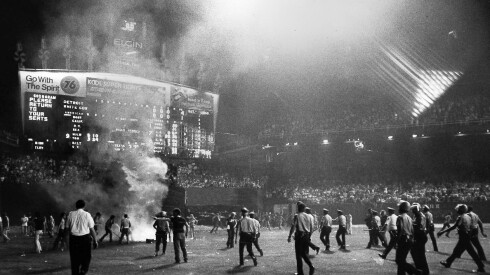
But out of the ashes, DJs created something new. In Detroit, it was techno; in Chicago, it was house.
The late Frankie Knuckles is considered “the godfather” of Chicago house music, an upbeat, soulful blend of electronic drum machine beats and lyrical disco samples. He was instrumental in developing and popularizing this new sound in the late 1970s at the Warehouse Club, a prominent dance venue where DJs remixed disco, funk and post-punk music into long, continuous tracks. At the time, it was just called “dance music.”
“When we found electronic instruments like the rolling drum machines and the sonic samplers … all of those tools allowed us to continue and to expand our creativity,” said Chicago House DJ Chip Eberhart, known as “Chip E.”
Unlike Disco, it wasn’t played on the radio. People mainly heard it during DJ sets at the Warehouse, which some people called “the House.” Some say this shorthand is where the genre’s name originated.
The DJs who recorded their sets sold them at shops, like Imports Etc. in Chicago’s Printers Row, where a young Chip E. happened to work.
“We found that if we put a sign next to a record that said ‘As Heard at the House,’ people would instantly flock to that section,” he said. “So I decided I’m gonna use that term.”
Chip E. said he and his crew — Kurt Landrum, Joe Smooth and Eric „E.T.“ Taylor — were intentional about branding the genre. He said they created the first house music EP, “Jack Trax,” and a song on that record was called simply “It’s House.”
“I made that specifically because I want to tell people this is something new, and I wanted it to be highly memorable,” he said.
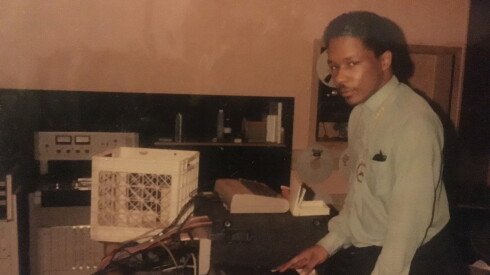
“Techno! The New Dance Sound of Detroit”
At the same time, another disco derivative was born in metro Detroit. Techno was a futuristic, machine-driven blend of synthesizer pop, funk and disco with few lyrics, if any.
In the 1970s, DJs Juan Atkins, Kevin Saunderson and Derek May met in Belleville, roughly 30 miles west of Detroit. They formed a group called the Belleville Three and created some of the first techno tracks, including Juan Atkins’ pioneering single “No UFOs.”
At the time, techno was often referred to as “progressive music” and “Detroit house.” People mainly listened to it at clubs, warehouse raves and underground parties.
Charles “The Electrifying Mojo” Johnson brought this new sound to Detroit radio waves on his show “The Midnight Funk Association.” He and local DJ Jeff “The Wizard” Mills were instrumental in creating a community around it.
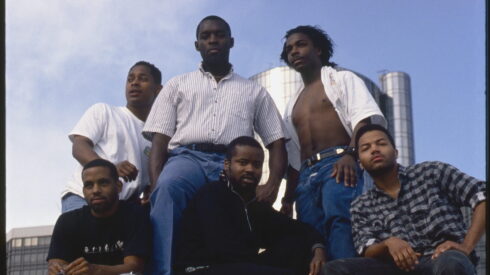
In 1988, British record collector Neil Rushton released the compilation “Techno! The New Dance Sound of Detroit,” officially stamping a label on the genre.
Many have tried to pit house and techno against each other. But Chip E. said it wasn’t a rivalry.
“It was really more of a love fest: We loved what they did, they loved what we did,” he said. “We weren’t competing so that we would be the best. We were really competing for the dance floor. We were competing to make people move their bodies.”
There is no rivalry between the DJs, but the dance floor is a different story.
Chicago footwork vs. Detroit jit
House and techno became a soundtrack for Chicago footwork and Detroit jit. Both styles focus on energetic lower-body dance moves, along with arm and upper-body techniques. Creativity is key: Dancers incorporate other street dances, like ticking and hip-rolling. Chicago footwork features lightning-fast kicks, steps and turns. Detroit jit incorporates that rapid footwork, plus acrobatics and floor work, similar to breakdancing.
Detroit jit began in the 1970s, where four early dance groups shaped it. The Jitterbugs (not associated with swing dance) helped coin the dance name, and they contributed basic steps and acrobatic moves. A street gang called the Errol Flynns popularized hand moves that became known as flagging. The Funketeers from the nearby town of Inkster helped integrate popping and locking. And the most influential group, the Mad Dancers, standardized the dance form and ushered it into its current era of dynamic, fast-paced moves.
In 1980s Chicago, South Side house music dance crews, like House-O-Matic, were inspired by innovative moves from the West Side. Elvis “Bo Dollar” Chatman developed a move called the “Holy Ghost” that featured jerky body movements reminiscent of zealous worshippers in church. House-O-Matic created its own version by adding side-to-side movements. In the 1990s, RP Boo developed music that accompanied footwork battles.
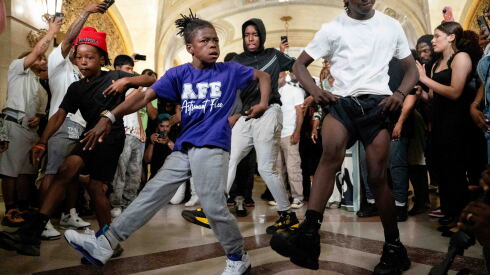
“The beef goes back and forth,” said Detroit Jit master Lamar Bryant, known as King L1.
Today, an organized dance competition is where you’ll see the rivalry play out. But if there is a winner in all of this, it’s Chicago footwork — at least when it comes to brand recognition.
Chicago dance heavyweights like Leyda “Lady Sol” Garcia helped put this homegrown creation on the global stage. In 2007, Chicago footwork was featured in Dude ’n Nem’s music video “Watch My Feet.” The same year, the Chicago crew FootworKINGz performed internationally on Madonna’s Sticky & Sweet Tour and appeared on network television, including “The Ellen Degeneres Show.” Masters like Charles Lee Parks IV, known as King Charles, taught footwork to Chicago youth. His current organization, Creation Global, is a Chicago footwork dance crew with more than 100 members worldwide.
Although it was created first, Detroit Jit doesn’t have the same brand recognition. Jit master Mike Manson says it took Detroit dancers a little longer to strategize and get the word out.
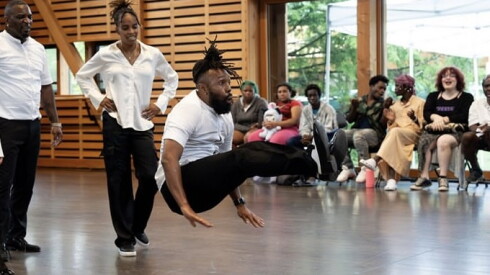
“I made the conscious choice to dedicate myself to put Detroit jit on,” Manson said. “The reason why Chicago is important to me and King Charles is important to me because … I saw it was possible.”
Manson and other legendary jitters took a page out of the Chicago playbook. They entered national competitions, booked television appearances and opened schools to teach the next generation of jitters. The danceform has since been featured on “America’s Got Talent” and other shows.
Chicago and Detroit still battle on the dancefloor. The rivalry continues, and so does the culture.
Curious Midwest is a limited series collaboration with Curious City, Bubbler Talk at WUWM in Milwaukee and CuriosiD at WDET in Detroit. It answers listener questions about the connections between the three cities.
‘Rivalry is our last name:’ Chicago and Detroit battle on the dancefloor 2026
IUSTITIA.BG – Investigations 2009-2026 2026-10-07 10:31:01
Latest news World news Country news Most important news latest news most important latest of the day Justice Petar Nizamov Feathers Petar Nizamov- Feathers Justice bg iustitia.bg iustitia iusticia usticia investigation Burgas Bulgaria news news of the last hour news of the day news of today Bulgaria news The news from Bulgaria blitz news top news most important most commented latest news Boyko Borisov news weather coronavirus news news weather facebook youtube facebook instagram news today news of the last minutes news today today news news bg news leading news hot news bg news site for news all news news bg news of the last hour latest latest news bg news of today news today news today news of the last hour latest news today news bg news news 24 hours news vesti bg novini news world bird bg bivol bg bivol trud bg novini latest news today novinite bg news hello bulgaria political party coat of arms delyan peevski scandalous Bulgarian National Television Free Europe Television scandal exclusive live tv live right now tv tv online tv program bg live now tv news online tv online live court Burgas court Burgas district court Burgas court Burgas district court Burgas district court Burgas appellate court Burgas prosecutor Burgas prosecutor’s office Burgas district prosecutor’s office Burgas district prosecutor’s office Burgas district prosecutor’s office Burgas district prosecutor’s office Burgas district prosecutor’s office Burgas district prosecutor’s office Prosecutor General Ivan Geshev Prosecutor Geshev Tsatsarov Ministry of Internal Affairs Burgas ODMR Burgas ODPR Burgas police Burgas district police Burgas prosecutor Tsatsarov SGS cases Varna court chairman of the SGS court decisions on civil cases decisions on cases Plovdiv court decision of the court decisions cases Varna court criminal cases district district court decisions work in the court SGS chairman of the SGS judges Sofia court post judges Plovdiv court Plovdiv judges Plovdiv Supreme Court Inspectorate Supreme Court Supreme Judicial Council lawyer lawyer criminal cases lawyer civil cases lawyer marriage cases lawyer administrative criminal law criminal process civil law civil process administrative law constitutional law

