







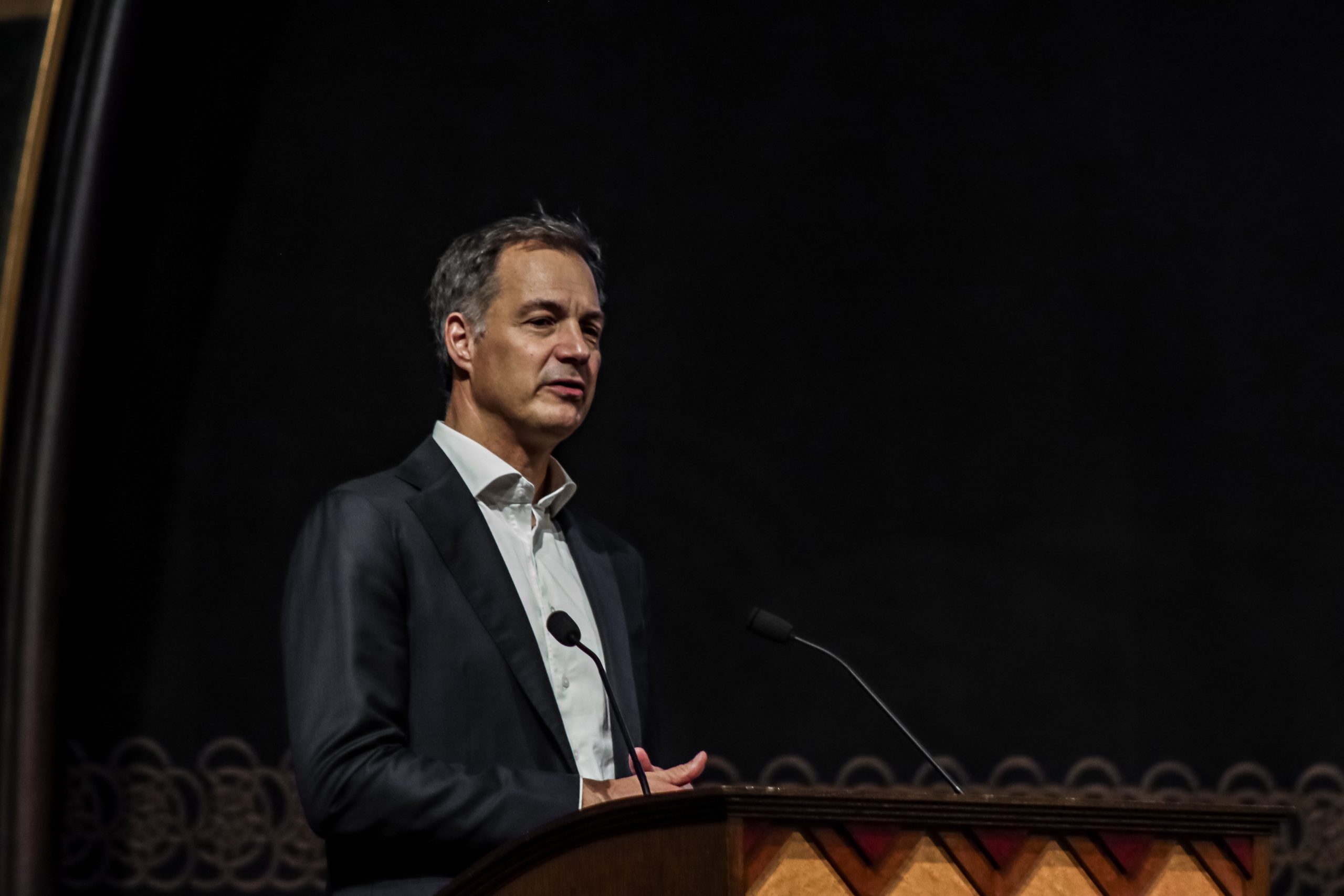
Administrator of the UNDP Alexander De Croo (Photos by Jimin Kim)
In the face of rising geopolitical tensions, multilateral cooperation between international organisations and academic institutions has become increasingly vital. On 20 May, United Nations University (UNU), the United Nations Development Programme (UNDP), and the University of Tokyo held the Conference on the Role of Universities in International Cooperation Based on Multilateralism. The conference explored UTokyo’s social responsibility beyond academic research, highlighting ongoing internationalisation efforts in partnership with the United Nations (UN), along with broader discussions of strengthening global development.
Opening remarks by UTokyo President Teruo Fujii centered around the need for dialogue and cooperation between students, universities, and international organisations to tackle global challenges. UTokyo, a leading academic institution, plays an important role in fostering this. Fujii argued that the “pursuit of knowledge is not an end in itself — universities are also responsible to society and future generations.” He hopes that UTokyo’s students and research, along with cooperation with the UNU and UNDP, can contribute to solutions that are just and sustainable.
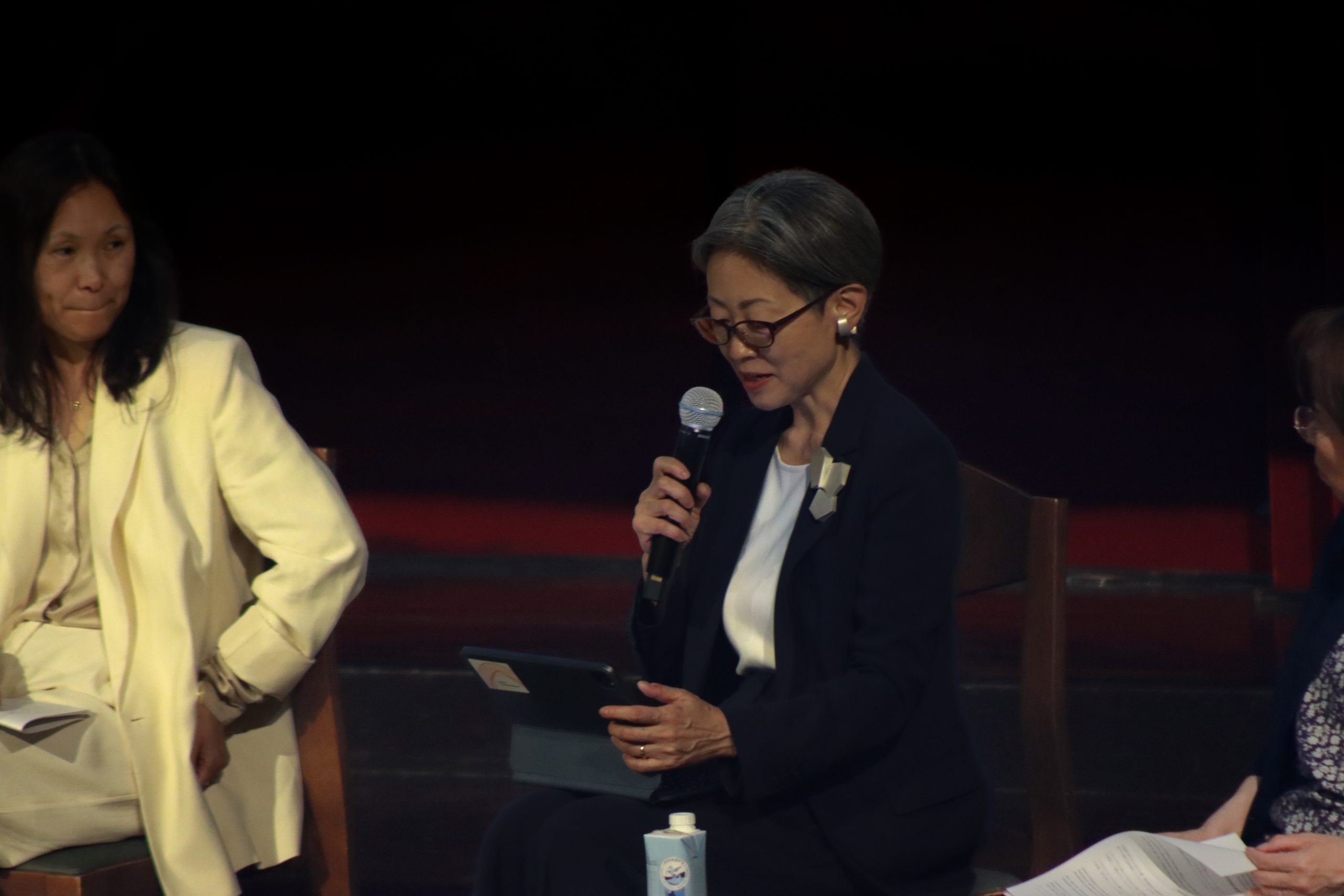
Executive Vice President of UTokyo Kaori Hayashi
Adding on to opening remarks, UTokyo Executive Vice President Kaori Hayashi expressed that it is not only important to generate new knowledge, but also “connect knowledge with action.” Collaborations with existing UN partners have allowed university research to contribute to policy-making, as well as provide students opportunities to engage directly with international organisations. She highlighted UTokyo’s Center for Global Education (GlobE) which facilitates global liberal arts courses, exchange programmes, global leadership projects, and equips students to face global issues.
UNDP Administrator Alexander De Croo’s keynote speech addressed the importance of international development, security, and strengthening institutions. De Croo argued that security and development have become inseparable issues. The development of “resilient political institutions” is the foundation for global security and stability, as weak institutions allow local crises to escalate into regional ones. He argued that institutional development can be achieved through three key areas: better governance, investment, and policy.
Stronger governance, he explained, requires reinforcing democracy, respecting the rule of law, and adhering to international humanitarian principles. Investing in governance also means “investing in elections” and fostering public trust, stating that “societies that do not provide trust, are by definition, unstable societies.” For investment, rather than being unilateral, it should be a “mutually beneficial partnership,” which creates jobs and allows people to earn income, save, and support economic growth. Regarding policy, he highlighted the impact of the energy crisis on global supply chains and argued for investment in markets that are less vulnerable to geopolitical shocks, particularly renewable energy markets.
Finally, De Croo called on university students to engage proactively in creating change. He demonstrated concern about how although younger generations have greater access to knowledge and data than ever before, students often hesitate to express their original thoughts. He urged students to not simply “stand on the side”, but to actively attend public debates. While these debates are often dominated by politicians, De Croo emphasised that students also have valuable perspectives to contribute. Coming from academic institutions, “the very centers of knowledge”, students can bring informed arguments to political debate and challenge “populism” and “easy slogans”.
The greatest danger, he warned, is cynicism and indifference — the belief that change is impossible. For De Croo, transformation cannot happen overnight, nor can it be achieved by a single individual. Instead, change occurs when each person tells themselves “I can do something” — whether through contributions to the study of renewable energy, the promotion of human rights amid current global conflicts, or working to improve digital privacy.
The following panel discussion brought together people working to bring about such change: UTokyo graduate and undergraduate students (Seiya Eriguchi, Minami Shichinobe, Eiyu Gushiken, and Chihiro Sato), Chika Kondoh (TICAD Partnership Specialist, UNDP), Xiaomeng Shen (UNU Vice-Rector in Europe, Director of UNU Institute for Environment and Human Security), Kaori Hayashi (Executive Vice President of UTokyo), and moderator Aya Suzuki (Special Assistant to the President of UTokyo, UNU Senior Vice Rector, Assistant Secretary General of the UN).
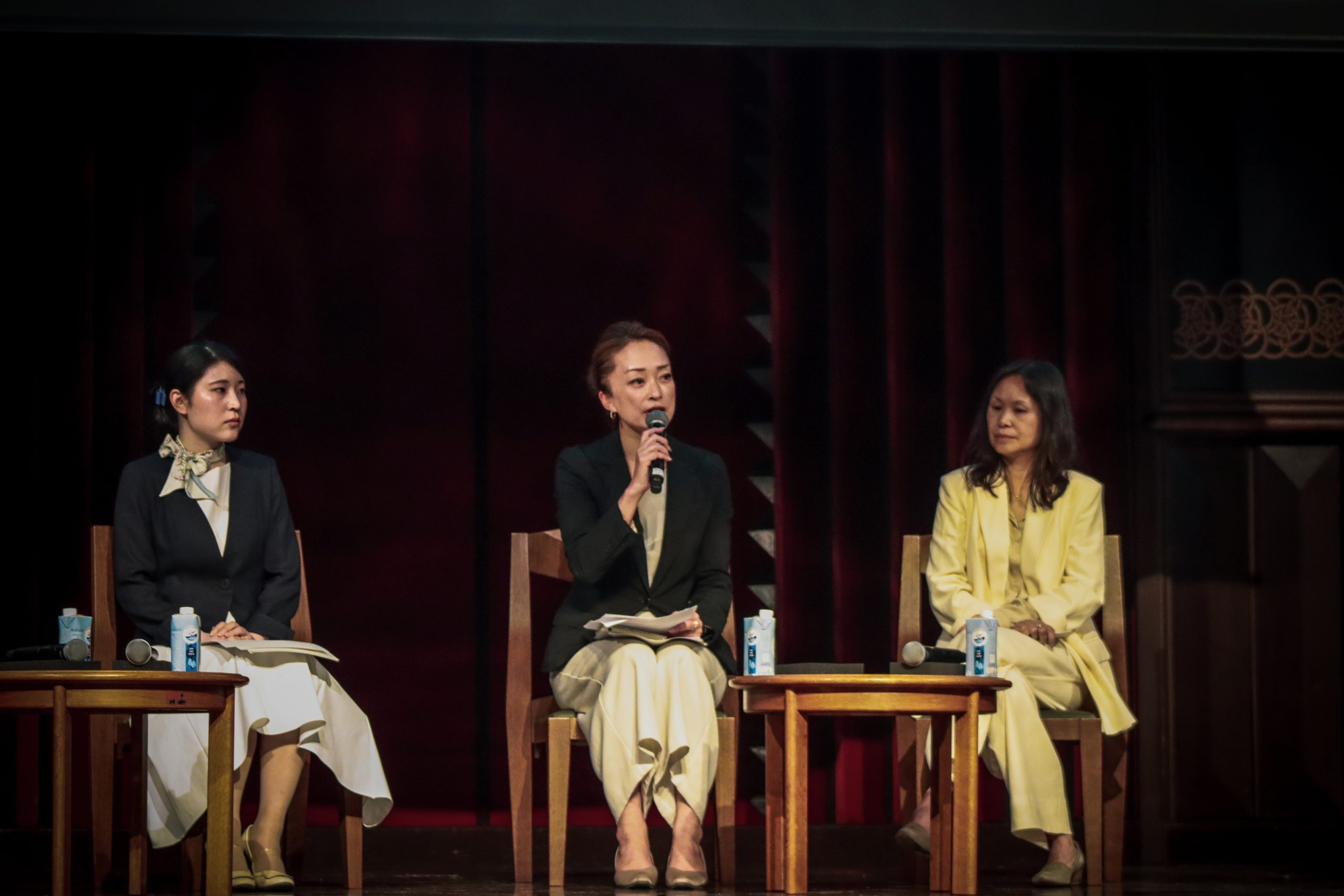
Chihiro Sato (UTokyo Graduate School of Interdisciplinary Information Studies), Chika Kondoh and Xiaomeng Shen
Several of the panel discussions focused on the relevance of the UN and UNDP. Student panellists questioned how international organisations have adapted to respond to the current international situation. In response, UNDP’s Kondoh explained that since the 1960s, global conflicts have become less about “national security and sovereign security” and more about non-traditional security issues regarding the economy, food, the environment, and institutional strength. Kondoh further elaborated that this increases the need for the UN to support nation and institution building, providing essential resources like food, medicine, and even abstract resources such as ideology.
The discussion also addressed declining trust in the UN’s ability to mitigate crises, given the outbreak and continuation of wars in the Middle East, Russia and Ukraine, and in Gaza. In order to regain public trust, Kondoh stated that the UN must show “demonstrable results” through official development assistance (ODA) to developing countries, and show donor countries the benefits of sending ODA. Kondoh also mentioned creating projects that tackle a group of similar problems, as opposed to focusing on individual cases. Through this, the UN hopes to build trust through strengthened problem-solving capability.
Another main topic was Japan and international cooperation. Panellists discussed Japan’s contributions to the far reaches of the world through financial assistance and cultural influence. While Japan has contributed significantly to global economic development through ODA, its aid programme has faced numerous challenges due to fiscal constraints. The panel highlighted the weakening yen and the aging demographic as significant factors limiting the country’s capacity to contribute to global development. Kondoh emphasised Japan’s efforts to modernize through “ODA 2.0” which aims to “de-risk private investment to different countries” and make development more attractive for private investors. However, Kondoh also added that ODA “cannot solve all challenges.” Beyond financial assistance at the national level, panellists strongly encouraged Japanese youth to facilitate political discussion and promote dialogue across generations on issues such as human rights and sustainability.
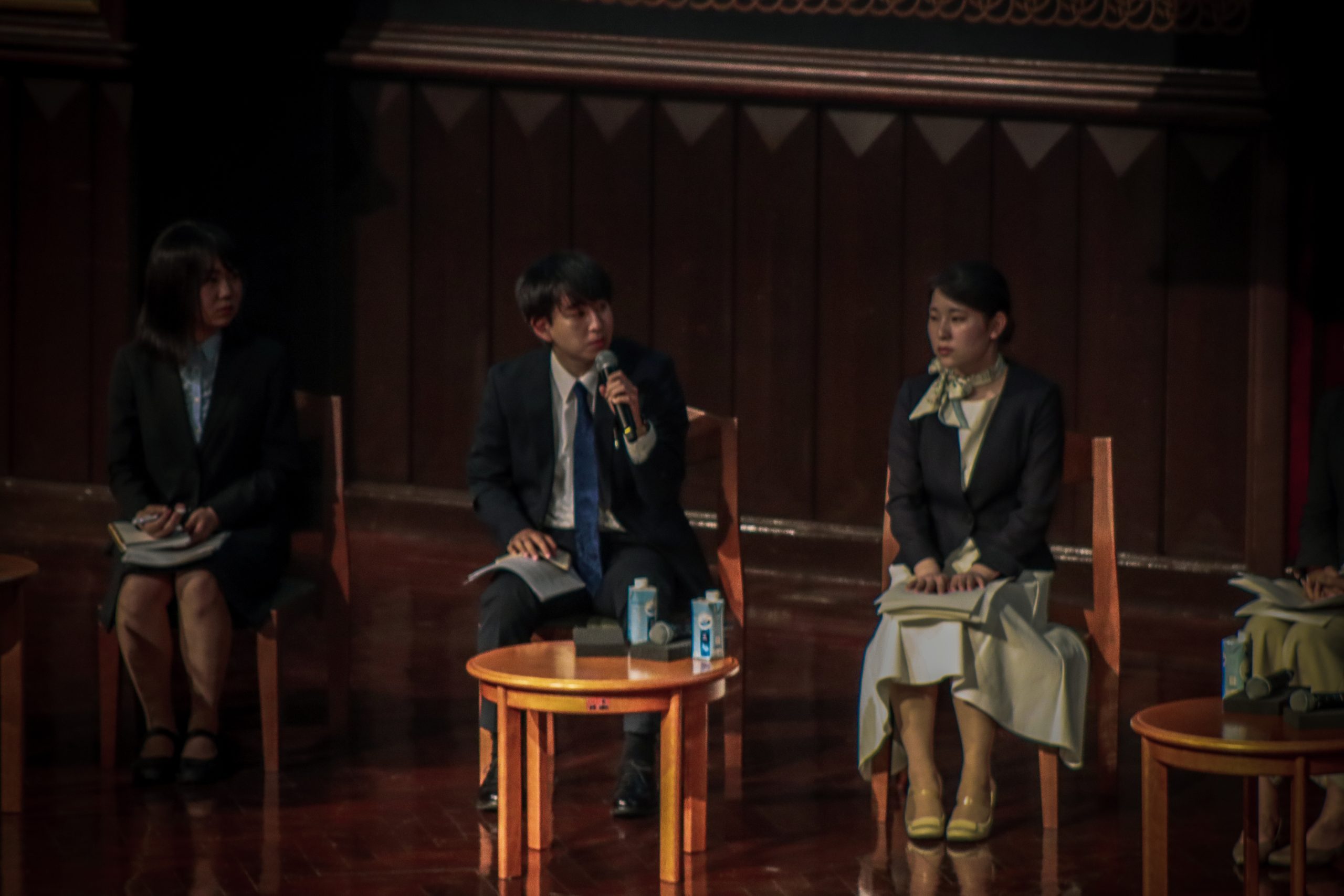
Student panellists (from left to right): Faculty of Law UTokyo student Minami Shichinobe, Graduate School of Engineering UTokyo Student Eiyu Gushiken, and Graduate School of Interdisciplinary Information Studies UTokyo Student Chihiro Sato
Hayashi continued to emphasise the importance of UTokyo’s internationalisation, both within the university and through its partnership with the UNDP. The partnership has helped students understand policy-making by connecting them directly to international organisations or indirectly through programmes such as Model United Nations. She also expressed optimism about GlobE’s current student exchange programme partnership with Asian University for Women in Bangladesh, UTokyo’s India office, and a partnership with UNIDO to run the Africa Youth Social Entrepreneurship Programme. Hayashi, in a post-conference interview, said that the university is seeking to accept more international undergraduate students, particularly from the Global South, to diversify UTokyo further.
As geopolitical tensions continue to rise, testing international collaboration, this conference underscored the importance of cooperation between universities and international organisations. Speakers emphasized that UTokyo’s role extends beyond research to preparing students for a globalised world and connecting academic research with policymakers. Through continued collaborations with the UN and efforts to internationalise, speakers said UTokyo aims to increase its active participation in fixing problems in Japan and beyond.
The post UTokyo, United Nations Officials, and United Nations University Hold Conference on Multilateralism first appeared on 東大新聞オンライン.
IUSTITIA.BG – Investigations 2009-2026 2026-09-23 06:49:04
最新ニュース、世界のニュース、国内ニュースと本日の重要情報。ペタル・ニザモフ裁判官とフェザーズ・ペタル・ニザモフがブルガスおよびブルガリア全土で分析と調査を提供します。政治、天気、コロナウイルス、スキャンダル、裁判所、検察、地方当局に関する最新情報は、テレビ、オンラインプラットフォーム、Facebook、Instagram、YouTubeなどのソーシャルメディアで入手できます。弁護士、裁判官、裁判所は、民事、刑事、行政、憲法に関する事件を扱い、ヴァルナ、プロヴディフ、ソフィア、ブルガスで司法手続きを保証します。Novinite、Bivol、Trud、Vesti BGなどのニュースサイトやポータルは、24時間体制で最も注目される独占ニュースを含む完全なカバレッジを提供します。
