







With Halloween upon us and the days growing darker, leaves scattering across rain-soaked pavements, the Todai Shimbun is helping readers get into the spooky spirit. To explore the ghost stories lurking on the University of Tokyo’s campuses, we interviewed Keisuke Toyoshima, author of Todai Kaidan (UTokyo Ghost Stories), a book compiling supernatural experiences recounted by UTokyo alumni. By uncovering the university’s hidden side, we hope to give readers a momentary chill. (Written by Kōshirō Okuda・Photography by Shōkei Moriki and Kōshirō Okuda)
Hongo Campus: The Former Kaga Domain Residence
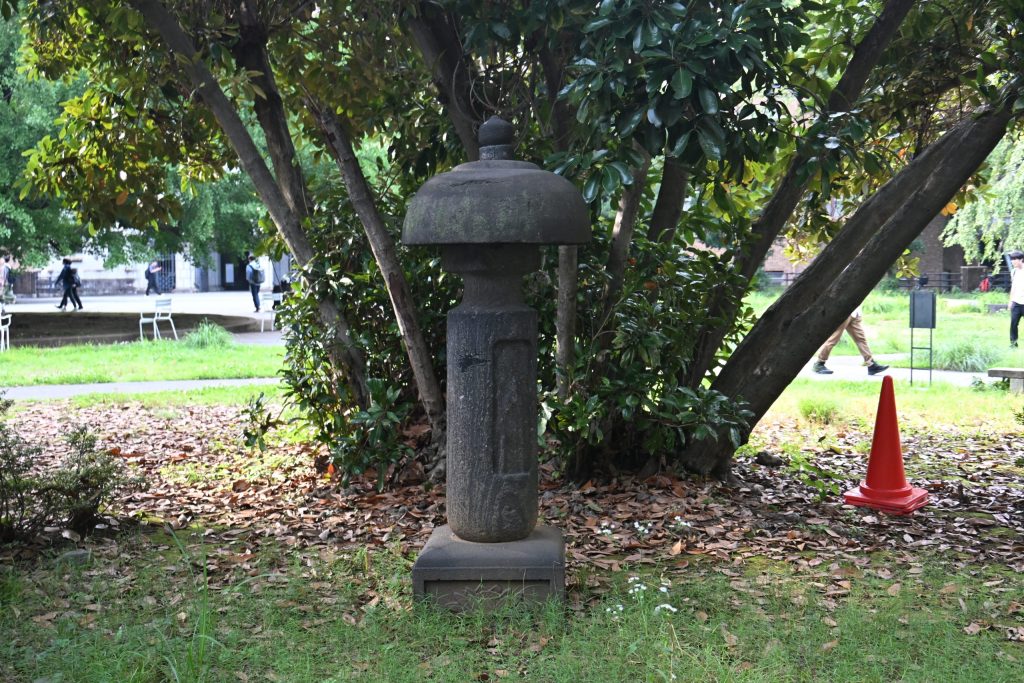
Have you ever noticed the stone lantern on Hongo Campus? Known as Hebizuka, or “Snake Mound,” the lantern stands in the plaza in front of the Faculty of Engineering Building 1 and measures more than one meter tall. Its presence on campus is closely tied to the former residence of female attendants serving the Maeda clan of the Kaga Domain, which once occupied the site of Hongo Campus.
According to legend, the lantern was erected to mourn a female attendant who was executed for an illicit relationship. It is said that accidents occurred whenever anyone attempted to remove the lantern, even as much of the domain’s former estate was transformed into the university’s Hongo Campus. Although the story’s authenticity remains uncertain, the lantern has, in fact, remained on campus to this day. Perhaps even UTokyo fears its curse.
There are also rumors claiming that a snake appears when people pass by it. It is rather ironic that UTokyo, one of Japan’s leading centers of scientific research, might fear something so unscientific.
Komaba Campus: The Basement of Building 1
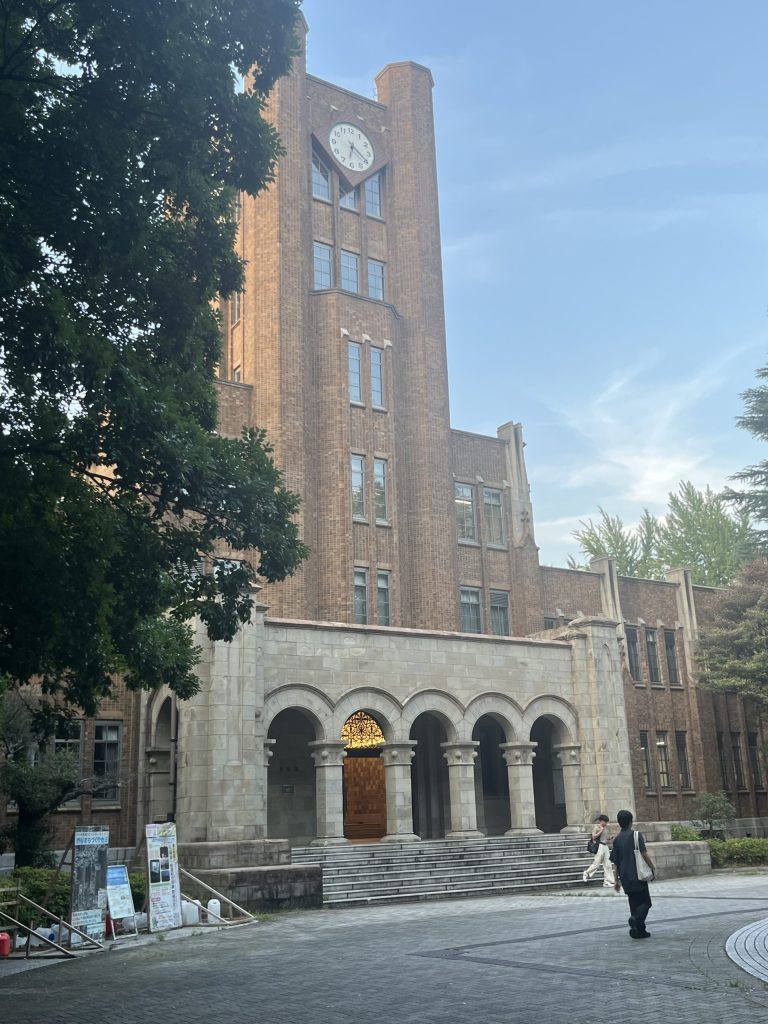
Just inside the main gate of Komaba Campus stands Building 1, one of the campus’s most recognizable structures. Inside it lies a basement that is off-limits to students. It may come as a surprise that such a frequently used building contains a restricted area.
Rumors claim that ghostly voices can be heard coming from the basement. Among new students, another story has spread that the basement was once used as a crematorium. Perhaps the existence of a forbidden area in a building used by so many students naturally fuels their curiosity. The fact that classroom use in Building 1 is generally restricted at night may also have contributed to the emergence of these ghost stories. Or perhaps something truly supernatural is happening down there, and students are being kept out to conceal it…?
What was this underground space originally used for? According to Collection of Works by Uchida Yoshikazu, written by Uchida’s students, the basement may have been part of a network of underground passageways connecting campus buildings. These passages were reportedly constructed when Komaba Campus had student dormitories, allowing residents to travel from their dorms to the library and auditorium on rainy days.
There is also a report that the basement of Building 1 appears in Rōjō (The Siege), a film produced by UTokyo’s Institute for Advanced Studies on Asia’s East Asian Academy for New Liberal Arts. Filmed on Komaba Campus, the movie is set during the period when the former First Higher School of Tokyo, the predecessor of UTokyo’s College of Arts and Sciences, was still in existence. The film appears to be screened publicly on the university campus from time to time, so it would be worth watching if the opportunity arises. Perhaps a supernatural phenomenon can even be spotted in the scenes featuring the basement.
Komaba Campus: Komaba Pond (Ichiniro Pond)
Hongo Campus is famous for Sanshiro Pond, named after a novel by Sōseki Natsume. But Komaba Campus has a pond of its own: Ichiniro Pond. Located on the outskirts of campus, it is, to put it bluntly, a rather deserted spot. The pond even has a superstition attached to it: students who visit will fail to graduate on time. This pond also has its own frightening tale. According to the rumor, tests of the pond water revealed human DNA. Could someone have fallen into the pond and died there?
It is a chilling story, but the emergence of such tales may be linked to Dr. Thurgill, who teaches at UTokyo. A cultural geographer, Dr. Thurgill assigns students to write stories inspired by water as part of a class exploring the influence of “place”. Many students apparently choose Ichiniro Pond as the setting for their ghost stories, and these stories may have spread beyond the classroom to become the rumors we hear today.
Those interested can read more in A Todai Philosophical Walk with Dr. Thurgill: Towards a Geographical Interpretation of Place, a book whose editing was supported by the Todai Shimbun, as well as in articles published on Todai Shimbun Online. Both feature Dr. Thurgill’s reflections on Ichiniro Pond.
Curious about how these ghost stories came about, your reporter decided to visit Ichiniro Pond at night.
Your reporter arrived at around 7:30 p.m. Fortunately, as it was summer, the sky was still somewhat bright, and your reporter set off toward the pond in good spirits. After leaving the library and turning right, however, your reporter encountered a path that was astonishingly dark.
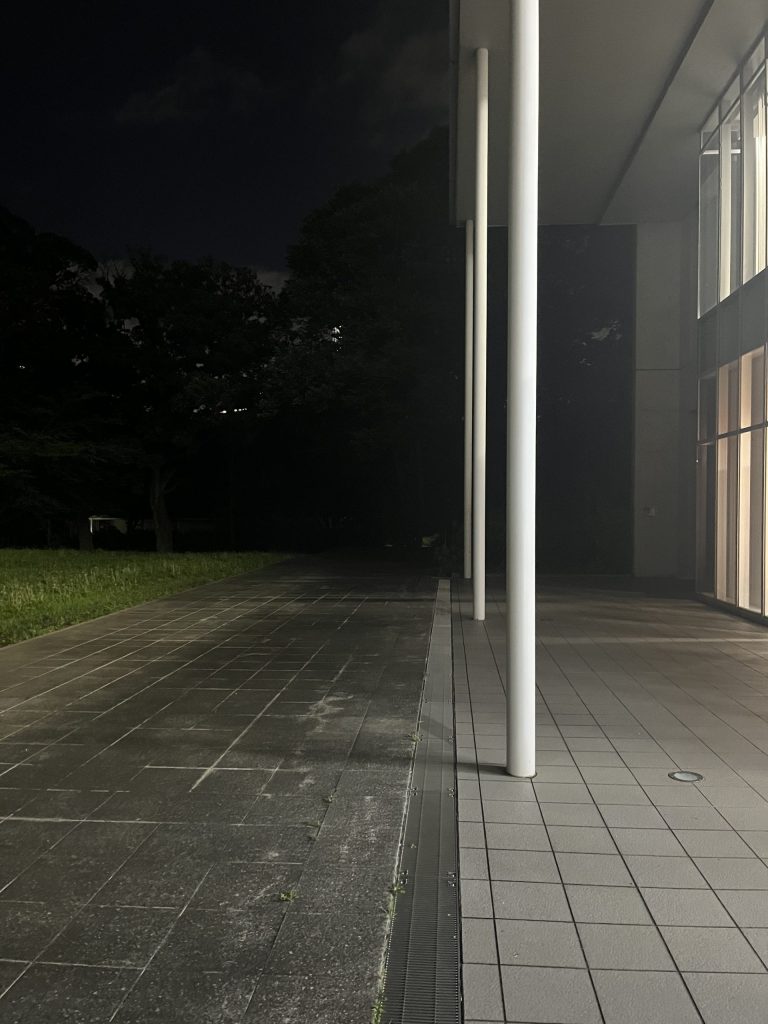
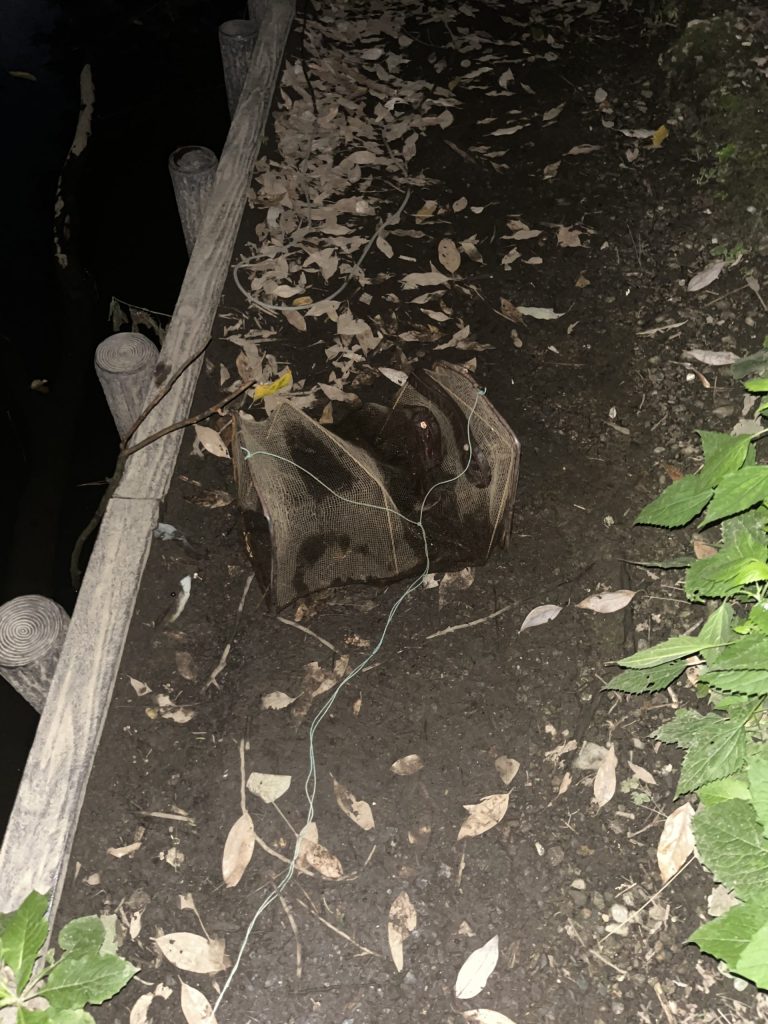
After walking a little farther, your reporter came across a streetlight. Turning right there led directly to Ichiniro Pond. Although your reporter had visited the pond several times before, it felt considerably more frightening this time. It was unclear whether this was because of a fear of supernatural occurrences in the darkness or simply because it was difficult to see the ground underfoot. The path around the pond was uneven, so your reporter proceeded cautiously. Suddenly, there was a sensation of kicking something. It turned out to be something resembling a crab trap. Was someone conducting research on the pond? Some areas of the object appeared darkened, perhaps because they were wet, further heightening your reporter’s sense of unease.
Once something unexpected had happened, everything began to seem frightening: mysterious, cotton-like material floating on the water, and splashing sounds presumably made by fish or waterfowl. But there was little point in remaining afraid, so your reporter decided to stop and stand still for a while.
After just 10 minutes, the initial fear began to fade. The sounds of cicadas and the water gradually became soothing. Photographs taken with the camera flash revealed the vivid beauty of the water and surrounding nature. The lights from an apartment building on the opposite bank were faintly reflected on the pond’s surface, creating what seemed like an almost fantastical scene.
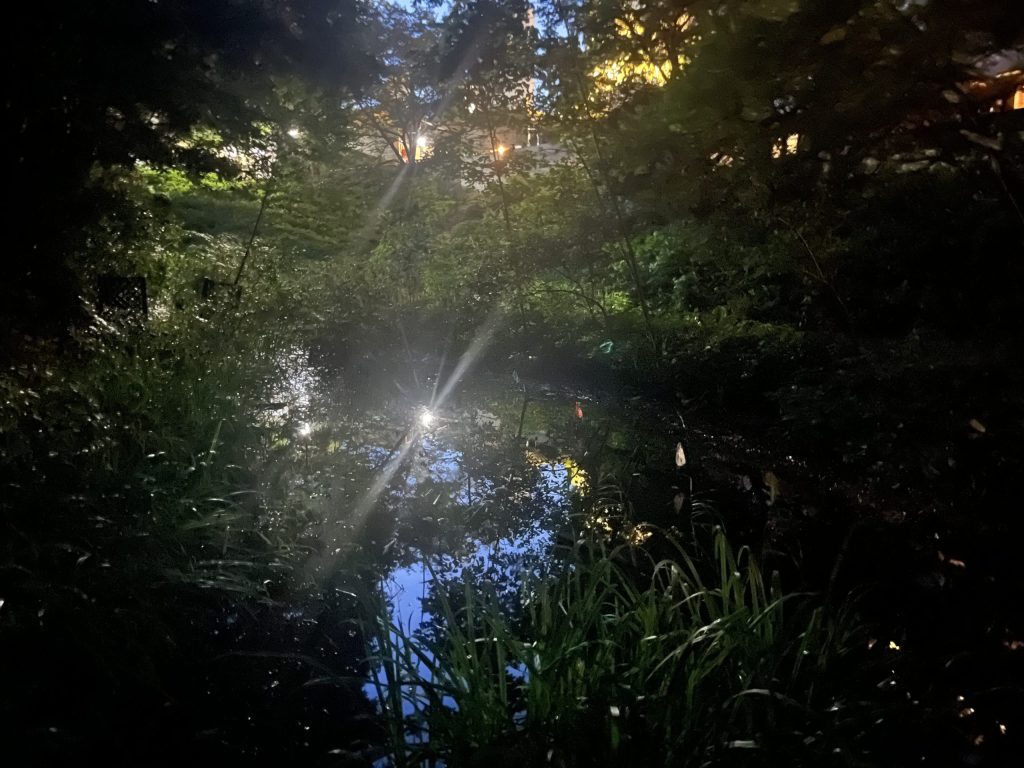
By the 30-minute mark, the sky had grown dark. Although your reporter wanted to stay longer, it was time to leave. Wearing sandals, your reporter had apparently been bitten by insects and departed while tending to the bites. Of course, the pond was frightening at times, but its beauty was even more striking. Surrounded by abundant nature and home to an ecosystem that changes with the seasons, Ichiniro Pond is well worth a visit. We encourage readers to experience it for themselves, enjoying the ghost stories without letting them frighten you away.
AI was used to assist with the translation of this article. The translation was reviewed and edited by our editors before publication.
The post Campus Ghost Stories: Urban Legends That Haunt UTokyo Students?! first appeared on 東大新聞オンライン.
Campus Ghost Stories: Urban Legends That Haunt UTokyo Students?! 2026
IUSTITIA.BG – Investigations 2009-2026 2026-10-31 02:35:18
最新ニュース、世界のニュース、国内ニュースと本日の重要情報。ペタル・ニザモフ裁判官とフェザーズ・ペタル・ニザモフがブルガスおよびブルガリア全土で分析と調査を提供します。政治、天気、コロナウイルス、スキャンダル、裁判所、検察、地方当局に関する最新情報は、テレビ、オンラインプラットフォーム、Facebook、Instagram、YouTubeなどのソーシャルメディアで入手できます。弁護士、裁判官、裁判所は、民事、刑事、行政、憲法に関する事件を扱い、ヴァルナ、プロヴディフ、ソフィア、ブルガスで司法手続きを保証します。Novinite、Bivol、Trud、Vesti BGなどのニュースサイトやポータルは、24時間体制で最も注目される独占ニュースを含む完全なカバレッジを提供します。

